Showing posts with label Tell Me a Funny Story. Show all posts

Monday, August 14, 2017

Gork, The Teenage Dragon by Gabe Hudson


Size matters. No dragon wants his horns to be too small or his heart too large, especially during the awkward teenage years. Suffering from both of these maladies, our hero Gork must navigate the toxic dragon masculinity of WarWings Academy and Planet Blegwethia.

Friday, August 11, 2017

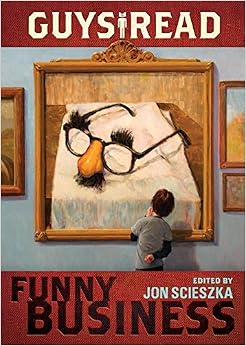
Guys Read: Funny Business

Guys Read is "a web-based literacy program for boys founded by author and First National Ambassador of Young People’s Literature Jon Scieszka." Mr. Scieszka has put together several books collecting different types of stories, including this. Guys Read: Funny Business is the first that he published.
I've been enjoying reading the stories, though I haven't finished it yet. One of my favorites so far was written by editor Scieszka and Kate DiCamillo (who wrote the amazing Because of Winn-Dixie). "Your Question for Author Here" is told as a series of letters between middle school student Joe Jones and author Maureen O'Toople. Joe contacted her for a school assignment he considers "lame." She agrees to answer his questions if he will answer some she poses to him. I imagine that Scieszka and DiCamillo have received letters from students regarding "lame assignments," and they have fun with this story. Quoting from it won't work very well, so I'm going to just recommend you get the book, and see how it works out. The other stories are worth your while, too. Funny Business!

Friday, February 17, 2017

Joel ben Izzy interview

http://www.indiebound.org/book/9780803740976
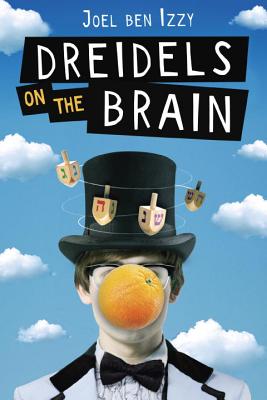
I recently interviewed Joel ben Izzy, author of Dreidels on the Brain, as part of the 2017 Sydney Taylor Book Award blog tour. Joel is the recipient of the Sydney Taylor Honor Book in the Older Readers category. In the interview, we discussed how his work as a novelist and a storyteller.

"I suppose that, as a storyteller, most of my life walks the tightrope between fiction and non-fiction," he said, describing Dreidels on the Brain as "mostly a memoir, with some parts fictionalized. But I think that the hard and fast distinction between 'fiction' and 'non-fiction' is overrated," he explained. "I think of my writing as something between the two - 'faction.'"

Learn more about Joel's writing rituals, his stories, and his inspirations in our interview at Bildungsroman.

Wednesday, February 1, 2017

Born a Crime by Trevor Noah

I love Trevor Noah. Truly, a good human being. I love hearing him talk about growing up in a time that included the end of apartheid and the beginnings of the new South Africa. Of what it was like to have a white father and a black mother at a time when that was not accepted.
As I listened to this book, which is totally worth it just to hear him speak in all of the languages he knows, I just kept thinking about what an amazing life he has led. Coming from a place where caterpillars were considered an ingredient, albeit not very often, to reach the level at which he performs daily is inspiring. I really appreciate the way that he can take a situation that is completely unacceptable and poke fun of it in a way that makes one think about it but laugh at the same time. He is really not afraid to say what he is thinking, and that has mostly served him well. Though at times, doing so has earned him a display of affection from his incredible mother in the form of a hiding. He candidly discusses behaviors that landed him in trouble and how he and his mother dealt with those situations. Always with a laugh and some positive spin on it to make it a learning experience, not just the mindless and heartless act of a troublemaker.
I will be talking this book up at the schools in my district!

Just for fun, here is a link from between scenes at the Daily Show which shows Trevor discussing feminism in South Africa. It's a good example of what it is like to listen to his book. https://www.youtube.com/watch?v=roddMS3X5Vo

Wednesday, January 18, 2017

Click Here to Start by Denis Markell

When I was a kid, my favourite movie was The Goonies. I would shove our well-worn VHS copy of it into the giant Panasonic player and my friends and I would pretend we were those kids, faced with insurmountable odds, solving riddles, getting into trouble, doing something fun.

Click Here to Start brought up all those great memories for me as I read it in one sitting over the weekend.

Twelve year-old Ted loves video games, particularly the  "escape the room" genre. He spends way too many hours of a hot L.A. summer sitting on his laptop cracking codes, solving riddles and beating the games, sans-walkthrough.

Then Ted gets news that his great uncle has passed away. In addition, he's left Ted everything in his apartment along with a cryptic message that there's treasure to be found.
At first, Ted thinks that his great uncle just left behind a lot of junk.

That's until he realises that the apartment is actually a riddle unto itself, a real life escape the room game. Together, with his friends Caleb & Isabel,  Ted must solve the riddle before the treasure gets into the wrong hands.

Tuesday, November 29, 2016

Timeless Titles


http://www.indiebound.org/book/9780140386332Happy holidays, everyone!

If you're searching for a good book to give to the kids and teens in your life and you're overwhelmed by all of the titles in the new releases section, I suggest getting some timeless titles - especially if it's a series or author that you yourself adored when you were older. That makes the selection and the sharing all the more special. Here are some of my personal favorites:

Classic Staples (all ages)
Anne of Green Gables by L.M. Montgomery
The Secret Garden by Frances Hodgson Burnett
Alice's Adventures in Wonderland by Lewis Carroll
Through the Looking-Glass and What Alice Found There by Lewis Carroll
Call of the Wild by Jack London
White Fang by Jack London

http://www.indiebound.org/book/9780152162504Fantastic Adventures (for ages 8 and up)
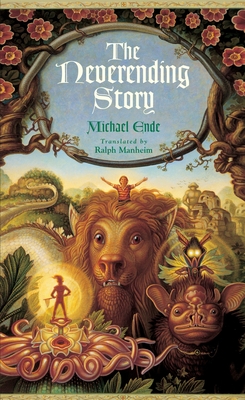
The NeverEnding Story by Michael Ende
The Phantom Tollbooth by Norton Juster
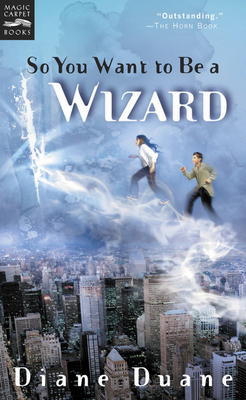
Young Wizards by Diane Duane (start with So You Want to be a Wizard)
A Wrinkle in Time by Madeleine L'Engle
His Dark Materials trilogy by Philip Pullman
The House with a Clock in Its Walls by John Bellairs
The Letter, the Witch, and the Ring by John Bellairs
The Narnia series by C.S. Lewis (The Lion, the Witch and the Wardrobe is my favorite)
The Keys to the Kingdom by Garth Nix (start with Mister Monday)
Magic Zero quartet by Christopher Golden and Thomas E. Sniegoski (formerly titled OutCast)

Cute Comedies
(for ages 8 and up)
* Note that each of these titles, with the exception of Sixth Grade Secrets, is the start of a series!
Beezus and Ramona by Beverly Cleary
Henry Huggins by Beverly Cleary
Tales of a Fourth Grade Nothing by Judy Blume
Everyone Else's Parents Said Yes by Paula Danziger
Sideways Stories from Wayside School by Louis Sachar
Sixth Grade Secrets by Louis Sachar

Mysteries, Murder, and Mischief
The Westing Game by Ellen Raskin
The Body of Evidence series by Christopher Golden and Rick Hautala (teens and adults; there are ten books in the series, starting with Body Bags)
Nancy Drew by Carolyn Keene (many books; #1: The Secret of the Old Clock)
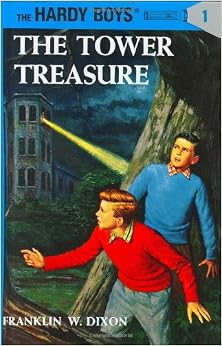
The Hardy Boys by Franklin W. Dixon (many books; #1: The Tower Treasure)

Secrets on the Homefront: World War II (ages 9 and up)
The Diary of Anne Frank
Number the Stars by Lois Lowry
The Book Thief by Markus Zusak

For additional suggestions, pop over to my book blog Bildungsroman where I have booklists galore for all ages in a number of categories. Many for the aforementioned titles are part of my Suggested Sets booklist. Enjoy!

Wednesday, October 19, 2016

Ghosts by Raina Telgemeir

Catrina and her family are moving from the hot, desert-like conditions of Southern California to a location further north. Catrina's sister, Maya, is ill and the northern climate is thought to be better for her.

Catrina doesn't want to go, she misses her friends, she misses her old place. She tries her best not to complain, but she's a teen and that's what teens do. 

One their first night, Catrina and Maya decide to explore the town a little. They find a seemingly abandoned arcade. It's dark, creepy, and a awesome at the same time. It's here that they discover one of their neighbours, and he drops a bombshell on them. 

The town they just moved to is haunted. 

Thursday, September 29, 2016

Hyperbole and a Half by Allie Brosh


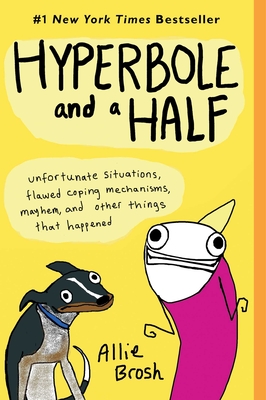
Like hilarious real-life anecdotes? Like them even more when they are accompanied by illustrations? Pick up Hyperbole and a Half: Unfortunate Situations, Flawed Coping Mechanisms, Mayhem, and Other Things That Happened by Allie Brosh. Inspired by her popular web comic - which you will probably be familiar with if you follow internet memes - this book collects stories from Allie Brosh's life, ranging from things her inept dog has done (or, rather, is unable to do) to her personal experience with depression.

Wikipedia accurately sums up Brosh's style as a combination of observational and absurdist humor. Brosh's reflections and admissions are like real life, but funnier -- and then you realize this IS her real life, and that makes it even funnier. Or sadder. Or both. Like the time her mother got lost in the woods with her two young daughters and tried to make a game out of it.

Though I love the entire book, if pressed to select my favorite portions, I would have to say The God of Cake and Thoughts and Feelings. In the cake story, a very young Brosh tells us about the time she was determined to eat her grandfather's birthday cake. Nothing could stop her, no matter what her mother said and no matter where her mother put the cake. That section reminded me, in part, of Cookies from Frog and Toad by Arnold Lobel.

In many passages, Brosh speaks quite frankly about her struggles with self-perception, motivation, and more. She considers what she knows she should do vs. she wants to do vs. what she actually does. There's her internal monologue, right there on the page, with crude (not naughty, but simple) drawings created in Paintbrush. Brosh finds both the humor and the agony in simple and complex situations, and I give her a hearty high-five for her willingness to share her pain and her delights with others. If you like Natalie Tran's communitychannel vlog or comedians or sitcoms that find the fun and the shame in everyday situations, then you should check out Allie Brosh's stories.

This review was originally posted at Bildungsroman.

Monday, September 12, 2016

Spontaneous by Aaron Starmer


To quote its narrator, Mara, Spontaneous by Aaron Starmer is “boom-boom bonkers.” Students in Mara’s senior class are spontaneously combusting, not so much bursting into flames as bursting into bits. Viscous bits. And the beginning of Spontaneous bursts with crackling energy, energy built of the conversational quality of Mara’s glib voice, energy built of an undeniably original premise. Indeed, the first one hundred pages of Spontaneous were explosively funny. (Oh, you thought I was above such a pun? You were wrong.)

Monday, August 29, 2016

Sixth Grade Secrets by Louis Sachar


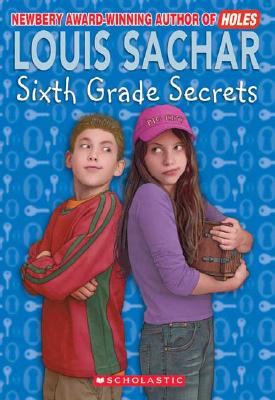
When she's little, Laura's father tells her the story of George Washington and the cherry tree. She strikes up a deal with him: if she doesn't lie, she doesn't have to cut her hair. Fast forward to sixth grade: Laura has long hair and a bold attitude. She finds a hat at a garage sale that says PIG CITY on it and starts wearing it to school. No one other than Laura and her two best friends are allowed to be part of the Pig City club. Soon enough, her classmate Gabriel starts up a club called Monkey Town. The classic boys-versus-girls scenario plays out in the schoolroom and the schoolyard.

This is my favorite Louis Sachar novel, hands down. Kids in upper elementary school who can't wait to go to middle school will race through this book. Sixth Grade Secrets is both funny and realistic. It still holds up thirty years after publication. Highly recommended.

Tuesday, May 3, 2016

The End of the Worlds

Practical Applications of Multiverse Theory, by Nick Scott and Noa Gavin, doesn't know exactly what kind of book it wants to be.

Scott Simmons is an awkward high school student who hangs out with a group of social outcasts--specifically several nerds plus an enormous guy named Ted who doesn't speak except to say "Hey, man" occasionally. For the most part Scott tries to just lay low and appear invisible to his classmates, hoping in this way to survive and eventually escape from his school.

Davey Burgess -- a name Scott thinks sounds like "something the movie Juno threw up"--is Scott's arch nemesis and near polar opposite. She's cute, the captain of the cheerleader squad and seeks out as much attention as the school will give her. She is also mean, relentlessly ambitious and has her sights set on becoming homecoming queen. She hates Scott as much as he hates her.

Yet, the two keep running into one another.

It all begins, as Scott describes, with a Dr. Pepper can that is somehow incorrectly filled with Hi-C. Scott manages to spill it on Davey's 80s spirit day t-shirt. This is the first and most innocuous of a number of strange occurrences that lead the two characters to an understanding that the universe as we know it is coming apart at the seams. Initially only Davey and Scott can see what's happening. For example, Scott's friends become lizards, try to eat him and then return to being human. And Davey's biology specimen frog comes to life and pleads with her to not cut it up.

After days of denial the two come to realize something is seriously wrong with the school as they slip in and out of realities populated by lizards, monsters, robots and sexy cannibalistic teenage girls who want nothing more than to mate with Scott before they consume him.

Friday, March 25, 2016

Sandman Slim by Richard Kadrey

Just look at the superhero movies playing now or in the near future -- from Deadpool and Suicide Squad to the darker storylines of Batman v. Superman, Captain America: Civil War, and pretty much the entire Wolverine franchise, and it's clear that this is the Age of the Antihero.

Viewers are burned out on the simple, heroic straight arrow. These are more complicated times, after all. We don't want Boy Scouts; we want vigilantes. We don't want Harry Potter -- we want Sandman Slim.

Wait... Who?

Thursday, February 11, 2016

Rootabaga Stories

I can't believe I haven't reviewed Carl Sandburg's Rootabaga Stories here yet! Of all the books we read to our kids, these were the ones that surprised me most. I was amazed that I had never heard of them. Maybe I focused too much on reading nonfiction?
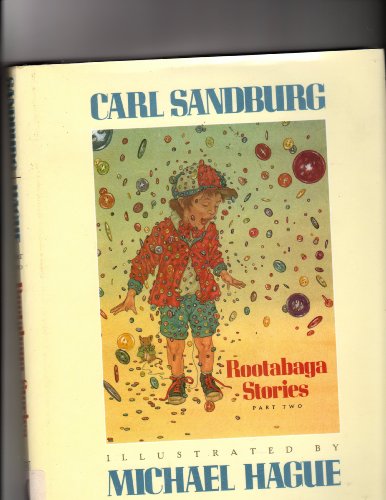
The Rootabaga Country may be somewhere between Oz and Mount Olympus. Sandburg let his imagination soar as he made up stories for his daughters. (Note: the illustration here is from the two-volume set illustrated by Michael Hague.The Rootabaga Stories have been published with various illustrators contributing their art. I just really like Hague's.)

Wednesday, November 4, 2015

SOPHOMORES AND OTHER OXYMORONS by David Lubar

Sophomores and Other OxymoronsKnowing how popular David Lubar's SLEEPING FRESHMEN NEVER LIE has been with my students, I didn't hesitate to pick up a copy of SOPHOMORES AND OTHER OXYMORONS as soon as it hit the bookstore.  In my opinion, the continuing high school adventures of Scott Hudson did not disappoint.

Things have definitely changed since the arrival of Scott's baby brother Sean.  Other than the fact that the little guy is usually loud, moist, and smelly, he is kind of cute.  Scott's father is still hoping to open his own garage, his older brother's band is enjoying some success, and it looks like Scott may soon have a sister-in-law.

With high hopes for sophomore year, Scott is determined to advance his friend relationship with Lee to a romantic level.  He is looking forward to contributing some high quality writing to the school paper.  He also has every intention of keeping his grades up and his prospects for a great future open.

Day one of sophomore year begins on the bus with an annoying freshman in need of Scott's advice and protection.  This is followed by a disgusting encounter with a partially dissected cat resulting in an embarrassing bout of public vomiting.  Worst of all, in English, the class that should be the highlight of his day, Scott discovers that the teacher most definitely doesn't appreciate his wit and wisdom.  It's beginning to look like sophomore year might not be all Scott dreamed it would be.

David Lubar packs in plenty of humor and tons of word play for readers as they navigate sophomore year with Scott and friends.  Quirky characters, non-stop action, and witty vocabulary will have readers laughing all the way through this hilarious page-turner.  Will Scott return for junior year in the near future?  We can only hope.


Previously posted at readingjunky.blogspot.com

Tuesday, October 6, 2015

The Shepherd's Crown by Terry Pratchett

The Shepherd’s Crown is the last of the Discworld novels, a series by the late Terry Pratchett that spans dozens of volumes all set on a disc-shaped world riding through space on the back of four elephants standing atop a giant turtle. The Discworld stories take place in the back alleys of the filthy city of Ankh-Morpork, in the hallowed halls of Unseen University and in the country hills of the Chalk. They tell of witches, wizards, goblins, dwarfs, sergeants, vampires, Death, postal workers and other strange folk. The Discworld series is so vast that it contains several mini-series within the larger series. The Tiffany Aching series to which the Shepherd’s Crown belongs is the best of these, so in a way The Shepherd’s Crown ends not one but two series.

Tuesday, September 29, 2015

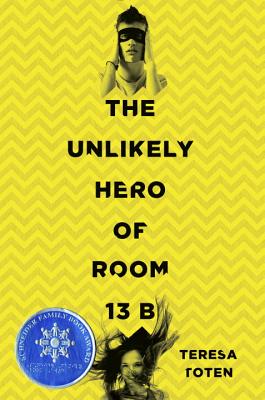
The Unlikely Hero of Room 13B by Teresa Toten

When Robyn Plummer walks into Room 13B, Adam falls in love at first sight. That may sound like a typical boy-meets-girl story, but, thankfully, this book is anything but cliché. The Unlikely Hero of Room 13B by Teresa Toten is refreshingly honest, anchored by a memorable main character.

Adam, age 15, is vulnerable, loyal, and sometimes confused by his feelings and by the actions of those around him. He is quieter than some, a little more in his thoughts, which are expressed in limited third-person narrative. His parents are divorced, and he lives with his mom most of the time. She pretends everything is okay while enduring her own private struggle, something Adam tries to both respect and understand. Meanwhile, his father has remarried, and while Adam gets along all right with his dad and his stepmom, the member of that household that undoubtedly enjoys his visits the most is his little brother, Sweetie, who is full of life and full of love. (Kudos to Toten for creating a young, vibrant character that sounds and acts his age. Absolutely spot-on depiction of a preschooler.) It is interesting to note what (and who) each member of Adam's family clings to, and what they're willing to fight for when the going gets tough.

When Adam isn't in one of his two homes, he is usually in Room 13B. Room 13B isn't a classroom; it's a meeting place for a young adult OCD support group. This book gave me what I wanted but didn't get from the TV show Red Band Society: a realistic look at a diverse group of kids who meet due to a medical diagnosis but are not defined by their condition; people who are not the "worst" examples of their condition nor the "best"; characters who are relatable but not cookie-cutter. Each teen has a distinct personality, appearance, and medical history. Their bonding sessions both inside and outside of Room 13B are wonderful. They honestly try to help one another rather than sabotage or one-up each other. When Chuck, the friendly, caring doctor who oversees the group, asks the kids to adopt nom de guerres, almost all of them select superhero names. Robyn picks Robin, prompting Adam to immediately declare himself Batman.

Adam is determined to win Robyn's heart. He has never been in love before, never had a girlfriend, but he falls head over heels for Robyn. He is not simply on a quest for love, but actually fascinated by this specific girl. As the story continues, their friendship develops and deepens. Adam's unconscious need to protect others extends easily to Robyn as he learns more about her, and he tries to be a better person (and taller) so he can be worthy of her. His OCD rituals are both aided and exacerbated by his new goals and his growing awareness that things aren't entirely right at either of his homes.

This book is good. It's solid and it's interesting and it's realistic and it's good. It sheds light on a condition that many people suffer from in silence and shame, and instead of reducing OCD to a punchline or over-dramatizing it, Toten offers believable characters with various rituals and paths to healing. The story moves at an easygoing pace with decent plotting. And most of all, it has a realistic protagonist who is a truly good egg. Adam is dealing with that wonderful, frustrating time when you don't want to be treated like a child but you sometimes wish you were still a carefree little kid, when you want to be independent but you can't drive yet, when you realize your parents are people with their own histories and bad habits and secrets. Just as the author does with his little brother, Toten is also able to capture the appropriate tone for Adam's age and situation. Adam sits at neither hero-with-a-burden character extreme, not wallowing in unbearable darkness and cursing the weight of the world that sits upon his shoulders, nor grinning from ear to ear and boasting that everything's going to be fine. He's simply trying to live his life. As his heart gets broken and mended, so will the hearts of readers.

The Unlikely Hero of Room 13B by Teresa Toten is a beautifully simple, steady coming-of-age story that I highly recommend, especially to fans of Jordan Sonnenblick and David Levithan.

Monday, September 14, 2015

Denton Little's Death Date by Lance Rubin


Featuring 1) the most eventful prom since Carrie, with less blood and more choreographed dancing to Bone Thugs-N-Harmony; 2) the use of “STD” as a verb (as in “Maybe Taryn did STD you”); 3) the most anxiety-fraught eulogy since Julius Caesar, delivered by the subject of the eulogy himself; and 4) hilariously inappropriate best friend boy banter, Denton Little’s Death Date by Lance Rubin is not the book I expected to be.

Monday, August 31, 2015

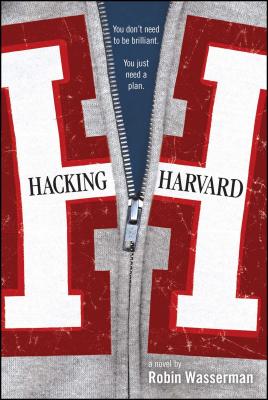
Hacking Harvard by Robin Wasserman

The novel Hacking Harvard by Robin Wasserman starts with a prank. Readers quickly learn that these characters aim to do things that will make people stop and think, to consider what's happening - no whoopee cushions or silly hacks, but rather, something that means something, that makes a statement.

The bet is to get someone into Harvard that wouldn't get in otherwise. Not a prank, Max clarifies, but a hack. Forget the kid stuff they've done before - this will be something huge, powerful, meaningful. Schwarz doesn't want to get expelled. Eric doesn't want to do something immoral. They find out that this is a bet Max made with the Bongo Bums. Named after Richard Feynman, a prankster and bongo player, they are two juniors from Boston Latin High School who make bets and do things for bragging rights, and want a rivalry with the other boys, who'd rather be left alone and do their own thing. Max pretends the bet is for $100 but the amount increases throughout the book.

"We're going to take the biggest loser we can find - the least ambitious, least intelligent, least motivated, most delinquent and drugged-up slacker we can get our hands on - and we're going to sucker this school into letting him in." At least, that's what is shared with the readers on page 46. Our players are not so forthcoming with the full details. Readers learn more about the terms and the payout as the book goes on.

It's not about sabotaging the other party's candidate but getting your own candidate IN. They get a tough guy named Clay who beat Eric up as a kid, when Eric tried to stand up for other kids and ended up as the punching bag.

Also along for the ride is Alexandra Talese. Wanting a name that is a little daring and edgy, she has decided to go by Lex in college. She takes the name out on trial run during her first in-depth conversation with Eric, after the SATs.

Lex wants to go to Harvard of her own choosing, not for the sake of "superficial, society-imprinted, consumerist non-entities," not legacy, but because she wants it, because she thinks it's the best school to attend, the result of her extensive college research:

"I had made my pro/con charts, carefully weighed all the options, and chosen a winner. There was a reason Harvard had a reputation for being the best, I'd decided, and the reputation was self-fulfilling, because it meant Harvard got the best -- the best students, the best professors, the best resources -- which I meant I wanted it to get me. I wanted to get lost in the country's biggest library; I wanted to learn Shakespeare from a grand master while staring up at a ceiling carved hundreds of years before. [...] I wanted to be in awe of the school, the teachers, the history, the legacy -- I wanted to be terrified I wouldn't measure up. I wanted to prove that I could." - Page 83

Lex reveals that she uses knowledge to her advantage - not just her book smarts, but the things she knows about certain people. She doesn't sabotage them in a physical or evil way, but she casually (or otherwise) lets people's secrets slip out so that she is picked over them: running for sixth grade president, talking the other girl out of joining the newspaper staff in ninth grade, then holding her position on the yearbook staff - this girl's theme song should be Use What I Got by Lucy Woodward!(1)

So why would an overachiever team up with the bums? Because although she had great grades, community service, leadership positions, and school staff positions, she felt like there was nothing outstanding about her, nothing that set her apart. No national awards or anything unique, outstanding, international, or amazing. She was not one-of-a-kind, she was not a special snowflake, she was merely one of many smart fishes in the sea: "Nothing set me apart. Nothing to make me special." - Page 213

Throughout the story, Eric is the voice of reason. He considers himself a realist, and he normally abides by the honor system, doing the right thing because it's right, so he really struggles with the bet. Eric is Jewish and says that instead of doing good deeds in life in order to earn a wonderful afterlife in an eternal paradise, "Judaism isn't about what happens next. It's about what happens here, in this life. You don't necessarily get rewarded for doing the right thing; you don't get punished for doing the wrong thing. You're supposed to be a good person just because that's the right thing to do. Doing the right thing -- that's the reward." - Page 170

Max Kim is a legacy, with his father and two older sisters all Harvard grads. Max likes to sell 80s items on eBay and thinks things should have a 500% profit. He's in this not just for his father or Harvard, but because of what they've been told: "It's about all the (nonsense) they've been feeding us since preschool: Do your homework, be good, fall in line, do what we say, and maybe, if you're lucky, you'll get the golden ticket. We're supposed to act like the only thing that matters is getting into college -- getting into this college - and so most of the people who do get in are the ones who buy into the (nonsense) so completely that they've never done anything for any other reason. It doesn't matter what they want, what they like, what they care about, who they are -- they don't even know anymore, because they're trying so (darn) hard to be the people Harvard wants them to be. In the end they're not even real people anymore. They're zombies." - Page 47 (Yes, I replaced the swear words for the sake of my younger readers. I'm sure you can fill in the blanks.)

Let's not forget Schwarz: geeky fellow, camera peeping got him out of their high school and homeschooled for two years. Now 16 and a Harvard freshman, this 96-pound weakling prefers numbers and photographs to real-life people, as humans are inherently flawed and photographs trap beauty on the page. Schwarz is eloquent. He doesn't necessarily use huge words, but he always uses full sentences and sometimes sounds a little antiquated ("I was not doing anything of any importance") as he actively avoids swearing and contractions (he tends to say "it is" rather that "it's"). He is awed by beautiful college girl named Stephanie who whines to him about her dates and breakups. He would be right at home in an 80s movie - and Max would then sell the movie poster on eBay.

The book also closes like a classic teen movie, providing information on what happened to all of the major players after high school - what colleges they attended, what career paths they followed, et cetera. There's also a disclaimer from the author asking readers not to hack in because it would be wrong, illegal, and dumb, and it's clear that she has both compassion for rising seniors dealing with college applications and total respect for admissions officers.

Wasserman is great at creating characters who are fueled by their goals and intentions, be they good or bad, selfish or selfless. The following speech is particularly awesome:

"Imagine there was something you really wanted. Not something petty, like knee-high leather boots or a new boyfriend, but something major. Something so significant that it would change your life forever. And imagine that you wanted that thing the way a child wants, without perspective, a wholehearted longing that consumed your entire being with the certainty that life would not, could not continue without it. Imagine that, like a child, you had no control over getting your heart's desire. You couldn't do anything other than lie awake at night and wish, furiously, desperately, hopelessly -- because, not actually being a child, you would know that wishing was useless. You would know that there are no magic wishes, no fairy godmothers descending with a wink and a want. Still, useless or not, you would dutifully squeeze your eyes shut every night, curl your hands into fists, listen to your heart thus, and, like a child, let yourself believe that someone was listening when you whispered: I wish. Now imagine that your wish was granted." - Pages 205-206

The book is mostly told in third person with first person woven in at the start, making readers curious about the narrator's identity until it is revealed - and it totally works.

Enjoy the book - but don't get any ideas, okay?

(1) Use What I Got by Lucy Woodward is an amazing song I have been known to listen to/belt out in order to pump myself up before a big event. I had the opportunity to sing it at an audition once - and I booked the gig.

- Review by Little Willow from Bildungsroman

Tuesday, August 11, 2015

YOU NEED MORE SLEEP: Advice from Cats by Francesco Marciuliano

From the creator of I Could Pee on This and I Could Chew On This comes a book full of sound advice for a good life. Or a cat's life, anyhow, and don't cats seem to have good lives?

You Need More Sleep, unlike the aforementioned books, is in prose rather than poetry. It consists of an Introduction followed by chapters: "Personal Relationships" (avoid them), "Social Interaction" (avoid it), "Career Advancement" (eliminate rivals), and "You, You, YOU!" (just what you'd expect). The book actually starts sweetly with a dedication to the author's "childhood's cat Bettina, who taught me everything I know except how to lie on top of a refrigerator without falling off." The introduction urges us to "Listen to the Cats", based on their "lives of utter confidence, complete independence, and blissful indifference while people continue to drive themselves to the brink of insanity with self-doubt, neediness, and the horrifying sensation that whatever they just texted, tweeted, or emailed will be the very end of their job, relationship, or reputation."

The first piece of advice in the "Personal Relationships" section is "Always Stay At Least 30 Feet from a Loved One", which extols the virtues of personal space.


A healthy relationship is as much about being together as it is as about personal space. And the best way to accomplish the latter is by never, ever sitting still. If your partner enters the room, get up and leave. If they follow you, make for the stars. If they pursue, do a hard turn into the bedroom, bank off the dresser, double-back into the hall, careen into the home office, swipe the workstation clean, fall into a wastebasket, and go back down the stairs. Keep running until they go to work and you get the eight hours of peace alone you both need for love to bloom.

The "Social Interaction" chapter features such noteworthy headlines as "Don't Be Nice to Unpleasant People", "It's Okay to Be Shy", and "Stay Quiet Just Long Enough to Be Taken Seriously" (possibly all sound advice, actually), interspersed with such things as "Steady Eye Contact is All the Listening You'll Ever Have to Do" and "Befriend People Who Are Good at Things You're Not. Like Opening Cans."

Monday, August 10, 2015

Poking a Dead Frog by Mike Sacks


Recently a childhood friend posted on Facebook that he was struggling to find the humor in Parks and Recreation, a show all his friends had told him was worth watching. After I recovered from my various levels of disbelief (You’re just now watching Parks and Recreation? You don’t find the character of Ron Swanson hilarious? Leslie Knope bothers you?), I thought about that most elemental of questions: What is Funny? The answer (other than farts, of course) may be unknowable, but Mike Sacks provides us with some of the smartest thinking about the question in his impressive Poking a Dead Frog: Conversations With Today’s Top Comedy Writers.