Sure, you've heard of Bigfoot and chupacabras, but what about snoligosters, wapaloosim, and leprocauns (not leprechauns)? The ghoulishly fun Fearsome Creatures of the Lumberwoods introduces readers to twenty legendary and fantastical creatures, including the latter three.
Our guide to the "wild and untamed" lumberwoods of North America is a cryptozoologist, one who is, "if I do say so myself, at or near the forefront of my field. So many colleagues have been eaten by chimeras, incinerated by salamanders, or pecked to death by barnacle geese; there is not necessarily much competition left."
Each short chapter is devoted to a single creature, accompanied by an illustration (some of which glow in the dark!), and explains why it is so hard to find, as well as what it does to the unfortunate people who, purposefully or accidentally, run into one. Fortunately for us, our cryptozoologist narrator has encountered many of them firsthand, like the toteroad shagamaw in Maine or the whintosser in California, and survived to share his wisdom.
I'd like to say that the stories in this collection are deliciously gory, except some of them involve rather unfortunate meals. Then again, considering the Acropelter entry in particular, this is probably a fitting description.
Monday, October 26, 2015
Wednesday, October 21, 2015
Armada by Ernest Cline
I rushed blindly into reading Armada with very high expectations. I loved Cline's first novel, Ready Player One and found myself recommending it to anyone who loved video games, D&D or sic-fi/fantasy in general. I have to be honest and say that Armada is no Ready Player One, not by a long shot.
I'll start with the good, Armada definitely made me nostalgic for my youth - jamming quarters into Gauntlet & Double Dragon arcade cabinets, sitting for hours on my bed trying desperately to beat The Legend of Zelda on NES. Even the cover seems to glow with light from an arcade game. It's a novel that wants you to remember the golden age of video games, and that's kinda the problem.
Zack Lightman is a seventeen year old video game nerd with a tendency for physical violence. His father died in a mysterious factory explosion when Zack was one, leaving a boulder-sized chip on his shoulder. His mother, who Zack refers to as "hot" (huh?) can recite Battle Star Galactica and World of Warcraft references better than any Cheeto-crunching basement dweller in the state.
Zack finds solace in a video game called Armada, an online flight simulator he plays every night with his friends. Armada may be the reason Zack lost his girlfriend, but it's also the one thing that keeps him focused and connected to his deceased father, who was also a massive gaming nerd.
After school, Zack spends his time working at Starbase Ace, a shabby video game store owned by Ray, a video game aficionado and Yoda to Zack's Luke. Zack seems happy to not have a plan in life, whittleing away the hours paying Armada and debating Star Trek vs. Star Wars with his friends.
Then, everything changes. Bored in class one day, Zack's gaze wanders to the window where he sees a flying saucer, and not just any flying saucer, the enemy ones from the game Armada. Convinced that he's hallucinating, Zack tries to shrug it off.
The problem is, you can't shrug off an alien invasion.
Labels:
dystopian
,
Everyone's Got Issues
,
Flying Cars and Lost Cities
,
Pop Culture
,
Survival
,
War - What Is It Good For?
Tuesday, October 20, 2015
My Brother is a Superhero by David Solomons
Any serious comic book aficionado can probably tell you the backstory of most of the main superheroes and probably a few of the other lesser known ones as well so well known is the mythology behind these fictional characters. The proliferation of summer blockbuster films has also helped propel the characters into the zeitgeist.
Labels:
Everyone's Got Issues
,
Pop Culture
,
Superheroes
Tuesday, October 13, 2015
OMAHA BEACH on D-DAY
Perhaps you've seen Saving Private Ryan, the film by Steven Spielberg, which opens with what feels like very real footage of landing at Omaha Beach in Normandy, France on June 6, 1944 - now known as D-Day. He has said publicly that without the photos of Robert Capa, he could not have made that movie. This book is the story of the man behind the only camera to actually reach the beach on D-Day, Robert Capa.
The book opens with a 55-page graphic novel retelling of Capa's career as a photojournalist written by Jean-David Morvan and illustrated by Séverine Tréfouël. It includes a four-page fold-out spread of what the invasion looked like from the shore. It's an engrossing, gritty telling of the first wave of the beach landing, as Capa chose to go ashore with Company E (sometimes called Easy Company), one of the first companies to put ashore, armed only with a camera. Capa's surviving D-Day shots follow the graphic novel, and are themselves followed by three separate essays: "The man who invented himself", a bio of Capa; "The eye of June 6, 1944", about Capa's life during D-Day; "In the viewfinder", about Capa as a photographer; and "A face (lost) in the waves", about the identity of the man in Capa's most iconic image from June 6th, 1944. All of the additional essays include additional Capa photographs, and were written by Bernard Lebrun. Translation into the English was done by Edward Gauvin.
The following spread is about the taking of the photo that became known as "The Face in the Surf":
And here's a link to that photo: The Face in the Surf, copyright Robert Capa, which is featured on the book cover (seen above).
The book opens with a 55-page graphic novel retelling of Capa's career as a photojournalist written by Jean-David Morvan and illustrated by Séverine Tréfouël. It includes a four-page fold-out spread of what the invasion looked like from the shore. It's an engrossing, gritty telling of the first wave of the beach landing, as Capa chose to go ashore with Company E (sometimes called Easy Company), one of the first companies to put ashore, armed only with a camera. Capa's surviving D-Day shots follow the graphic novel, and are themselves followed by three separate essays: "The man who invented himself", a bio of Capa; "The eye of June 6, 1944", about Capa's life during D-Day; "In the viewfinder", about Capa as a photographer; and "A face (lost) in the waves", about the identity of the man in Capa's most iconic image from June 6th, 1944. All of the additional essays include additional Capa photographs, and were written by Bernard Lebrun. Translation into the English was done by Edward Gauvin.
The following spread is about the taking of the photo that became known as "The Face in the Surf":
And here's a link to that photo: The Face in the Surf, copyright Robert Capa, which is featured on the book cover (seen above).
Labels:
Graphic Novel
,
History Matters
,
War - What Is It Good For?
Monday, October 12, 2015
All American Boys by Jason Reynolds and Brendan Kiely
“Nobody says the words anymore, but somehow the violence
still remains” (218).
Jason Reynolds and Brendan Kiely wrote All American Boys together, an act of unity sorely necessary in the
fragmented streets and schools of America. These two men have written a
passionate story of what happens when power, anger, and privilege
intersect. Of what happens when racial biases and assumptions are questioned,
when loyalties are tested, and when whom you’ve stood with contradicts what you
now stand for.
Thursday, October 8, 2015
The Art of Asking or How I Learned to Stop Worrying and Let People Help
As I listened to Amanda Palmer read the audiobook of The Art of Asking, I knew that I would also want to read it. The audiobook includes her music, and she is a wonderful reader/artist. This is one of those rare instances where I want to experience both. Because when I read it, I have time to think about, and make note of her many insights. And she IS insightful. I spent my late teens and my twenties juggling dozens of jobs, but I mostly worked as a living statue: a street performer standing in the middle of the sidewalk dressed as a white-faced bride... Being a statue was a job in which I embodied the pure, physical manifestation of asking: I spent five years perched motionless on a milk crate with a hat at my feet, waiting for passersby to drop in a dollar in exchange for a moment of human connection.
Artists connect the dots - we don't need to interpret the lines between them. We just draw them and then present our connections to the world as a gift, to be taken or left. This IS the artistic act, and it's done every day by many people who don't even think to call themselves artists.
Then again, some people are crazy enough to think they can make a living at it.
Artists connect the dots - we don't need to interpret the lines between them. We just draw them and then present our connections to the world as a gift, to be taken or left. This IS the artistic act, and it's done every day by many people who don't even think to call themselves artists.
Then again, some people are crazy enough to think they can make a living at it.
Wednesday, October 7, 2015
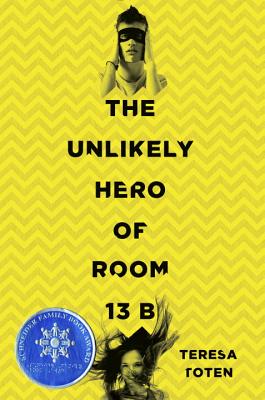
THE UNLIKELY HERO OF ROOM 13B by Teresa Toten
Adam's parents have shared custody, but most of Adam's time is spent living with his mother. She has her own problems. Through the years since the divorce her tendency toward hoarding has increased, and it is beginning to worry Adam. Recently, she has seemed particularly upset. She finally admits that she has been receiving threatening letters, but she swears Adam to secrecy fearing that if anyone finds out about the letters and the hoarding problem, Adam's father will insist that she give up her son.
Tuesday, October 6, 2015
The Shepherd's Crown by Terry Pratchett
The Shepherd’s Crown is the last of the Discworld novels, a series by the late Terry Pratchett that spans dozens of volumes all set on a disc-shaped world riding through space on the back of four elephants standing atop a giant turtle. The Discworld stories take place in the back alleys of the filthy city of Ankh-Morpork, in the hallowed halls of Unseen University and in the country hills of the Chalk. They tell of witches, wizards, goblins, dwarfs, sergeants, vampires, Death, postal workers and other strange folk. The Discworld series is so vast that it contains several mini-series within the larger series. The Tiffany Aching series to which the Shepherd’s Crown belongs is the best of these, so in a way The Shepherd’s Crown ends not one but two series.
Tuesday, September 29, 2015
The Unlikely Hero of Room 13B by Teresa Toten
When Robyn Plummer walks into Room 13B, Adam falls in love at first
sight. That may sound like a typical boy-meets-girl story, but,
thankfully, this book is anything but cliché. The Unlikely Hero of Room 13B by Teresa Toten is refreshingly honest, anchored by a memorable main character.
Adam, age 15, is vulnerable, loyal, and sometimes confused by his feelings and by the actions of those around him. He is quieter than some, a little more in his thoughts, which are expressed in limited third-person narrative. His parents are divorced, and he lives with his mom most of the time. She pretends everything is okay while enduring her own private struggle, something Adam tries to both respect and understand. Meanwhile, his father has remarried, and while Adam gets along all right with his dad and his stepmom, the member of that household that undoubtedly enjoys his visits the most is his little brother, Sweetie, who is full of life and full of love. (Kudos to Toten for creating a young, vibrant character that sounds and acts his age. Absolutely spot-on depiction of a preschooler.) It is interesting to note what (and who) each member of Adam's family clings to, and what they're willing to fight for when the going gets tough.
When Adam isn't in one of his two homes, he is usually in Room 13B. Room 13B isn't a classroom; it's a meeting place for a young adult OCD support group. This book gave me what I wanted but didn't get from the TV show Red Band Society: a realistic look at a diverse group of kids who meet due to a medical diagnosis but are not defined by their condition; people who are not the "worst" examples of their condition nor the "best"; characters who are relatable but not cookie-cutter. Each teen has a distinct personality, appearance, and medical history. Their bonding sessions both inside and outside of Room 13B are wonderful. They honestly try to help one another rather than sabotage or one-up each other. When Chuck, the friendly, caring doctor who oversees the group, asks the kids to adopt nom de guerres, almost all of them select superhero names. Robyn picks Robin, prompting Adam to immediately declare himself Batman.
Adam is determined to win Robyn's heart. He has never been in love before, never had a girlfriend, but he falls head over heels for Robyn. He is not simply on a quest for love, but actually fascinated by this specific girl. As the story continues, their friendship develops and deepens. Adam's unconscious need to protect others extends easily to Robyn as he learns more about her, and he tries to be a better person (and taller) so he can be worthy of her. His OCD rituals are both aided and exacerbated by his new goals and his growing awareness that things aren't entirely right at either of his homes.
This book is good. It's solid and it's interesting and it's realistic and it's good. It sheds light on a condition that many people suffer from in silence and shame, and instead of reducing OCD to a punchline or over-dramatizing it, Toten offers believable characters with various rituals and paths to healing. The story moves at an easygoing pace with decent plotting. And most of all, it has a realistic protagonist who is a truly good egg. Adam is dealing with that wonderful, frustrating time when you don't want to be treated like a child but you sometimes wish you were still a carefree little kid, when you want to be independent but you can't drive yet, when you realize your parents are people with their own histories and bad habits and secrets. Just as the author does with his little brother, Toten is also able to capture the appropriate tone for Adam's age and situation. Adam sits at neither hero-with-a-burden character extreme, not wallowing in unbearable darkness and cursing the weight of the world that sits upon his shoulders, nor grinning from ear to ear and boasting that everything's going to be fine. He's simply trying to live his life. As his heart gets broken and mended, so will the hearts of readers.
The Unlikely Hero of Room 13B by Teresa Toten is a beautifully simple, steady coming-of-age story that I highly recommend, especially to fans of Jordan Sonnenblick and David Levithan.
Adam, age 15, is vulnerable, loyal, and sometimes confused by his feelings and by the actions of those around him. He is quieter than some, a little more in his thoughts, which are expressed in limited third-person narrative. His parents are divorced, and he lives with his mom most of the time. She pretends everything is okay while enduring her own private struggle, something Adam tries to both respect and understand. Meanwhile, his father has remarried, and while Adam gets along all right with his dad and his stepmom, the member of that household that undoubtedly enjoys his visits the most is his little brother, Sweetie, who is full of life and full of love. (Kudos to Toten for creating a young, vibrant character that sounds and acts his age. Absolutely spot-on depiction of a preschooler.) It is interesting to note what (and who) each member of Adam's family clings to, and what they're willing to fight for when the going gets tough.
When Adam isn't in one of his two homes, he is usually in Room 13B. Room 13B isn't a classroom; it's a meeting place for a young adult OCD support group. This book gave me what I wanted but didn't get from the TV show Red Band Society: a realistic look at a diverse group of kids who meet due to a medical diagnosis but are not defined by their condition; people who are not the "worst" examples of their condition nor the "best"; characters who are relatable but not cookie-cutter. Each teen has a distinct personality, appearance, and medical history. Their bonding sessions both inside and outside of Room 13B are wonderful. They honestly try to help one another rather than sabotage or one-up each other. When Chuck, the friendly, caring doctor who oversees the group, asks the kids to adopt nom de guerres, almost all of them select superhero names. Robyn picks Robin, prompting Adam to immediately declare himself Batman.
Adam is determined to win Robyn's heart. He has never been in love before, never had a girlfriend, but he falls head over heels for Robyn. He is not simply on a quest for love, but actually fascinated by this specific girl. As the story continues, their friendship develops and deepens. Adam's unconscious need to protect others extends easily to Robyn as he learns more about her, and he tries to be a better person (and taller) so he can be worthy of her. His OCD rituals are both aided and exacerbated by his new goals and his growing awareness that things aren't entirely right at either of his homes.
This book is good. It's solid and it's interesting and it's realistic and it's good. It sheds light on a condition that many people suffer from in silence and shame, and instead of reducing OCD to a punchline or over-dramatizing it, Toten offers believable characters with various rituals and paths to healing. The story moves at an easygoing pace with decent plotting. And most of all, it has a realistic protagonist who is a truly good egg. Adam is dealing with that wonderful, frustrating time when you don't want to be treated like a child but you sometimes wish you were still a carefree little kid, when you want to be independent but you can't drive yet, when you realize your parents are people with their own histories and bad habits and secrets. Just as the author does with his little brother, Toten is also able to capture the appropriate tone for Adam's age and situation. Adam sits at neither hero-with-a-burden character extreme, not wallowing in unbearable darkness and cursing the weight of the world that sits upon his shoulders, nor grinning from ear to ear and boasting that everything's going to be fine. He's simply trying to live his life. As his heart gets broken and mended, so will the hearts of readers.
The Unlikely Hero of Room 13B by Teresa Toten is a beautifully simple, steady coming-of-age story that I highly recommend, especially to fans of Jordan Sonnenblick and David Levithan.
Labels:
Everyone's Got Issues
,
First Love
,
Tell Me a Funny Story
,
The Way We Live
Monday, September 28, 2015
Spare Parts by Joshua Davis
Oscar, Lorenzo, Cristian, and Luis didn’t have much in common, other than being born in Mexico and entering the US illegally as children. Each had his own reasons for joining the robotics team at their high school, located in a poor area of Phoenix, AZ. Cristian was the only one actually interested in robotics.
But together, the four students built a robot they called Stinky. At a national underwater robotics competition, sponsored by NASA and the US Navy, their team defeated teams representing colleges and universities, winning first place in spite of their inexperience, their extremely limited budget, and all the obstacles associated with poverty and low expectations.
In 2005, Wired magazine published an article about their victory. But there’s more to this story than a single competition. In Spare Parts: Four Undocumented Teenagers, One Ugly Robot, and the Battle for the American Dream, Joshua Davis expands on his original article, introducing readers to four teens, two teachers, their paths to the robotics team, and the difficulties they have already overcome, as well as those they still face today.
But together, the four students built a robot they called Stinky. At a national underwater robotics competition, sponsored by NASA and the US Navy, their team defeated teams representing colleges and universities, winning first place in spite of their inexperience, their extremely limited budget, and all the obstacles associated with poverty and low expectations.
In 2005, Wired magazine published an article about their victory. But there’s more to this story than a single competition. In Spare Parts: Four Undocumented Teenagers, One Ugly Robot, and the Battle for the American Dream, Joshua Davis expands on his original article, introducing readers to four teens, two teachers, their paths to the robotics team, and the difficulties they have already overcome, as well as those they still face today.
Subscribe to:
Posts
(
Atom
)