Shakespeare is awful. Rather, the manner in which most students first explore his work is awful. Trying to force some exposure to canonical great works onto students before the chance is gone, the endeavor all too often falls into a mind-numbing series of translation exercises. Now that we’ve read the scene, can anyone explain what’s happened?
I wouldn’t go so far as to suggest the plays should be read in the modern vernacular, as classes now tackle Beowulf, but in order to capture what’s rewarding about Shakespeare, readers have to be able to engage with the substance of the work in ways meaningful to their lives. Macbeth and Julius Caesar are masterfully written political thrillers, rife with some of the language’s most beautiful poetry, raising questions about the nature and dangers of power. But what in them speaks to the experience of a sixteen year-old?
Tuesday, March 30, 2010
Monday, March 29, 2010
After Ever After
At the age of five, Jeffrey was diagnosed with leukemia - lymphocytic lymphoma, to be specific. He was a lucky little boy: His parents and 13-year-old brother, Steven, were there for him every step of the way, and the community rallied around him. He was a lucky little boy: He survived.
Years later, Jeffrey's in remission, but reminded of his illness every day, thanks to the limp and other irrevocable marks left on his body and his mind by the cancer. Radiation and chemotherapy left him "a little scrambled up," making him "spacey" on occasion. Now in eighth grade, he instantly bonds with a new classmate, a girl who just moved to New Jersey from California. The second Jeffrey meets Lindsey, he knows she's his dream girl. Dealing with middle school (and trying to impress female classmates) is hard enough without having physical impairments, but Jeffrey has an unsinkable spirit. His best friend, Tad, also a cancer survivor, is less upbeat about his condition. The two boys have leaned on each other both in and outside of school since the fourth grade. Now, their last year in middle school will test their strength - physical strength, mental strength, and strength of character - over and over again.
After Ever After will make readers laugh and cry and feel. It will be a delight to fans of Drums, Girls & Dangerous Pie, the book that introduced us to the Alper family, a book that I read, loved, and hand-sold like crazy the year of its release, and have continued to recommend ever since. After Ever After is a solid stand-alone story, so those who came upon After without having read Drums, Girls & Dangerous Pie won't be lost, but they would be wise to read the equally-fabulous Drums to see how the story began. Instead of picking up the story right where Pie left off, Sonnenblick opted to fast-forward After Ever After to Jeffrey's eighth grade year and make him the first-person narrator instead of Steven, who was the protagonist of the previous story. Readers catch up with Jeffrey quickly, learning not only of his medical history and current health status but also of his elementary and middle school experiences. Likewise, we are informed of Steven's whereabouts - something I won't give away here, something that was another bold choice on Sonnenblick's part which ensured that this story was now solidly Jeffrey's - and what a great story it is.
"I can't walk too well, but when I'm on my bike, I can fly."
Go, Jeffrey, go.
Saturday, March 27, 2010
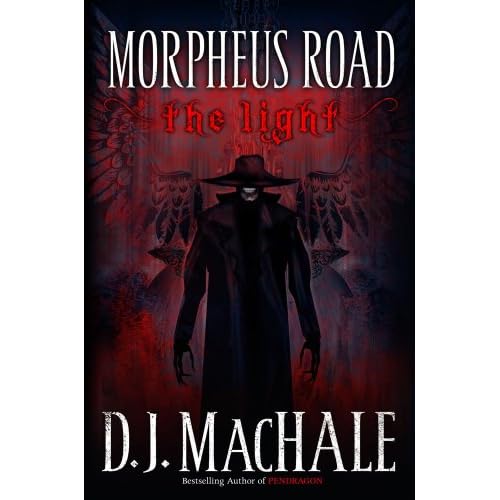
Morpheus Road:The Light by D.J. MacHale
This month I have a guest reviewer. It’s Max, my 12-year-old son, who was thrilled to see a new book by D.J. MacHale.
I believe in ghosts.
That’s the first sentence of D.J. MacHale’s riveting fantasy novel, Morpheus Road: The Light. It’s taken some convincing, but after I read the book, I’m starting to believe it too.
Marshall Seaver is expected to have the time of his life, home alone while his dad is on a business trip in Las Vegas. This 16 year-old, finds this out in ways that he never expected. The knocks on his bedroom wall, the signs he sees formed in spilled cat food. He feels these are all messages; signs that someone is in his house.
Friday, March 26, 2010
From Recession to the Stars: Childhood's End
It's hard to be optimistic about humanity these days, isn't it? People aren't working, banks are going out of business, governments are mired in intractable ideologies. We've discovered that human space travel is all but impossible thanks to cosmic radiation, exorbitant fuel requirements, and the impenetrable barrier of light speed. We've seen no evidence of intelligent life in the cosmos, and God knows there's little enough evidence of intelligence life here on Earth, either. The signs are mounting that our environment is changing in ways we cannot predict: deforestation, species loss, mutating diseases...the list goes on and on.
Of course, there's always the long view. After all, just a few thousand years ago, we were living in caves and eating carrion, weren't we? We've come much farther than you might expect (some more than others).
Arthur C. Clarke's novel Childhood's End is all about the long view of humanity--the VERY long view from our present difficult days to an almost miraculous ascension to our higher destiny in the distant future. It's a book full of wonder and possibility, a veritable mission statement for science fiction as the literature of amazement and hope.
Of course, there's always the long view. After all, just a few thousand years ago, we were living in caves and eating carrion, weren't we? We've come much farther than you might expect (some more than others).
Arthur C. Clarke's novel Childhood's End is all about the long view of humanity--the VERY long view from our present difficult days to an almost miraculous ascension to our higher destiny in the distant future. It's a book full of wonder and possibility, a veritable mission statement for science fiction as the literature of amazement and hope.
Tuesday, March 23, 2010
Horror Movie Guy talks books -- from Lovecraft to Judy Blume
Matt Cunningham is a Hollywood screenwriter, SFX artist and director. He worked on special effects for Starship Troopers, wrote and directed "The Mangler Reborn" and even played "chainsaw victim" in "Decampitated." (More on IMDB.)
But now he's transitioning into writing books for young readers, including a moody monster book called "Eternal Springs." He interviewed me about a project, so I jumped at the chance to interview him, too, mostly about books...
When you were in high school or college and people started talking books, what would you tell them they just had to read?
As a guy you can imagine the looks I got from other boys in high school spreading the word of Judy Blume, Beverly Cleary and Katherine Paterson. Bridge to Terabithia is one of my all time favorite books. That one I tell everyone to read, if they haven't already. Of course C.S. Lewis, Tolkien and in the darker days, Lovecraft and King.
Today, what books would you tell guys that age they should read?
I am a book junkie (my wife can attest to this) and I could ramble on for days about what to read. So I will go with some of the most recent books that I love. Monster Blood Tattoo by D.M. Cornish. This one really grabbed me and has lots of great mystical aspects to it. Percy Jackson books, sooo good. Thanks Rick Riordan for those goodies. Spiderwick Chronicles, I love these books. I gobble them up. This really fun series of books called Secrets of Dripping Fang by Dan Greenburg. I just get a kick out of them. Lots of boogery fun. For comedy and good times check out I am a Genius of Unspeakable Evil and I want to be Your Class President by Josh Lieb, I was laughing out loud at this one.
And what books should they avoid?
Twilight - seriously, spend your time reading Bram Stoker or Mary Shelly. This onslaught of vampire novels is nauseating. Every book on the shelf looks like a vampire novel. I like vamps, but give me something that hasn't been done in Buffy. Buffy rules by the way.
Were there any particular books that got you moving on the road to SFX and movie work?
Swords... Sorcery... those were all you needed!
Back in the day, sword and sorcery was a huge genre. Forget hobbits. Forget Hogwarts. We're talking blades that slashed thugs and thieves in the dead of night and magic so sinister that no one in the right man dared practice it. Blame two of the best characters ever invented in fantasy--I'm talking Fafhrd and the Gray Mouser. Where to begin the adventure? A book called Swords and Deviltry.
Monday, March 22, 2010
Survivors of the Zombie War
There is value in the official report of the United Nation's Postwar Commission, "a collection of cold, hard data, an objective 'after-action report' that would allow future generations to study the events of that apocalyptic decade." But the stories of the survivors, military and civilian, those who profited from the war and those who are still bearing its scars, are too important to lose. The stories of some of these survivors have been transcribed and collected in Max Brooks’ World War Z: An Oral History of the Zombie War.
Friday, March 19, 2010
Flash Burnout
The last time I checked out the "books for boys" in my local independent bookstore, I couldn't help but notice that most of the stories on those shelves could fit into three categories: action / adventure, fantasy, funny. Not all, of course, but most. It got me thinking. Is more "realistic fiction" written and published for girls than for boys? I think that would be an interesting question to investigate because it sure seems like there are more books about real teen life and the day-to-day struggles of growing up, that are targeting girl readers compared to those written for boy readers.L.K. Madigan's first YA novel, Flash Burnout, is one to take note of for any teen guy who likes a story about real life - no spies with guns, no wizards, no goofball comedy (but still funny - just not all funny, all the time). The novel won this year's William C. Morris YA Debut Award (given to the most impressive new voice in YA literature). It was up against some well-reviewed titles, so I had high expectations. It met them, quietly.
Flash Burnout is the story of Blake, a pretty ordinary kid, a nice guy. He's a bit of a clown, always trying to get people laughing. He has a girlfriend, who is a total babe. She's the first girl he's ever said, "I love you" to. He's figuring out exactly what it feels like to be with someone you care about that much. He thinks about sex, quite a bit, but he's not sure whether he's ready or not, and he'd really like it if his dad stopped trying to talk to him about it. Blake is also friends with a girl named Marissa from his photography class. She's cool, and they have great conversations. She takes photos of pretty things, and he takes pictures of edgy stuff, which is why their photography teacher calls them "pretty and gritty." By chance, Blake ends up taking a picture of Marissa's mom on the street for photography homework, and this gets Marissa back in touch with her mom, who has been addicted to meth for a long time and has drifted in and out of Marissa's life. The more Blake gets involved with Marissa's messy personal life, the more he has trouble juggling time with his girlfriend and his girl friend. Flash Burnout is about love and loyalty, growing up and making mistakes, and learning how messy relationships can be.
Blake has a voice that is immediately engaging and true, which really pulls you into the story. This is a book very much focused on everyday life, the ordinary interactions that happen between family members and friends at home and at school. This means that it isn't a fast-paced read, but it will be satisfying for someone who appreciates convincing relationships between characters and values that more than external drama. It is refreshing to read a story about such an ordinary kid. He's not grappling with a life or death situation. He's not tortured by his past / present experience. He's just figuring out his life as he goes along, and is beginning to appreciate the complexity of friendship and love. I'd like to listen in on a YA book club discussion of this title, because I think it would stir up some good conversation among girl and guy readers. So remember Flash Burnout when you're in the mood for a little real life.
Flash Burnout is published by Houghton Mifflin.
Thursday, March 18, 2010
Operation Teen Book Drop is coming soon...
So apparently the ALA has a newsletter out that reveals Guys Lit Wire will be hosting two Powells wish lists for school libraries as part of the Teen Book Drop. Unfortunately there is a little confusion over when the wish lists go active. So here's the scoop - we will not be making them public until April 7th. On that day I will run a big post here with all the details on the schools, how to access the lists and where the books need to go. Please be patient as the event unfolds on schedule and we coordinate with the librarians on the books they need for their students.
Terrance Hayes is to basketball...

as Michael Jordan's moves are to poetry. I mean, he's good.
I was not a big poetry guy, and whenever I bumped into poetry, poets, and poetry readings, I always felt left of center and outside everything going on.
But then, several years ago, I happened to hear Terrance Hayes read his poetry. Terrance Hayes is a powerful reader, a great reader, and he has an easy, inviting way of discussing his poems that lets you feel like he's okay with you enjoying them, eating them up, making them your own.
That right there to the left, that's him. I decided to put his face there instead of the cover of one of his books, mostly because I couldn't choose just one Terrance Hayes collection of poetry to highlight--they've all got good stuff.
Subscribe to:
Posts
(
Atom
)