Wednesday, October 20, 2010

"But just so we're reminded of the ones who are held back / Up front there ought to be a man in black."

It's hard to wrap your head around the facts and figures of Johnny Cash's career: He got his start at Sun Records with Elvis, Jerry Lee Lewis, and the birth of modern popular music. He was the youngest inductee of the Country Music Hall of Fame. He racked up eleven gold and platinum records, won his first grammy in 1968, and his seventeenth posthumously in 2008. Through the years in between, Cash stood at the heart of popular American music while remaining one of it's great innovators.

Two books explore his incredible career and stormy personal life: Johnny Cash's own autobiography, Cash and Reinhard Kleist's graphic novel, Johnny Cash: I See a Darkness.

Tuesday, October 19, 2010

American Vampire

American Vampire by Scott Snyder and Stephen King (writers) and Rafael Albuquerque (art) (Vertigo), arrives as a near-antitode to much of the current vampire lit, as Halloween comes just around the corner.

I hadn't caught up with this Vertigo title until its recent five-issue collection here. Those a bit weary of "lovelorn Southern gentlemen, anorexic teenage girls (and) boy-toys with big dewy eyes" (as King's intro has it) in their vampire books (and shows) might enjoy this parallel tale set in both the Old West and silent-movie era Los Angeles, as Snyder (with a scripting assist from King in the "western" parts) seek to create a uniquely "American" take on this particular night creature.

Which they do in the form of gunslinger Skinner Sweet, who -- in finest American fashion -- is both bloodthirsty and psychotic, in both living an undead incarnations. Though there's also a certain method to his madness as he takes on a cartel of "ruling class" vampires, themselves from "Old Europe," who see perfect bloodsucking opportunities (literal and otherwise) in America's nascent corporate plutocracy.


And hey, the Hollywood parts -- with its tales of "B-girls gone bad" -- almost get you thinking that Nathanael West must've written a vampire tale right before he tackled that all-time Hollywood novel (which also gave us the name "Homer Simpson"), Day of the Locust.

The traffic in the denouement(s) gets a tad cluttered, but it's a compelling ride all the way through, leaving you with a nice set-up for the next arc, when a teen girl comes calling for vengeance of her own -- just as the twenties give way to the depression-era 30's.

Good reading for Halloween in any decade!

(A different version of this review appeared on Nexus Graphica)


Monday, October 18, 2010

Friend is not a Verb by Daniel Ehrenhaft

I have a special place in heart for books that break a run of terrible or mediocre books that I'm reading. For me the latest book like that is Friend is not a Verb by Daniel Ehernhaft.

Hen is justifiably angry. His sister, Sarah, disappeared over a year ago without telling him why. His parents know, but won't tell him. His girlfriend, Petra, just kicked him out of her band and dumped him. He is barely processing that when he finds out that his sister is coming home. He doesn't know how he feels about all of this, especially the fact that Sarah is hiding from the law and still won't tell him anything.

Ehrenhaft does a wonderful job portraying Hen's anger and disappointment in a realistic way. As the story progresses Hen is able to grow through his friendly relationship with his neighbor, Emma, and bass lessons with his sister's fellow fugitive, Gabriel.

Hen humorously uses the style of VH1's Behind the Music to describe his life. Nothing comes easy, however. His parents are crazy and unpredictable, his sister is mysterious and he is driven to thievery in order to figure out what is going on with Sarah and Gabriel.

This is a good funny novel about a teenager growing among odd circumstances. I wasn't a big fan of Ehrenhaft's Dirty Laundry, but now I looking forward to more offerings from the author. This would be good for fans of As Easy as Falling off the Face of the Earth by Lynne Rae Perkins and Ostrich Boys by Keith Gray.

Friday, October 15, 2010

Half Brother

Kenneth Oppel's latest offering, Half Brother, is an affecting and thought-provoking look at how humans and animals interact, specifically humans and chimpanzees. It's the story of Ben Tomlin and his family, and what happens when Ben's father, a behavioural scientist, begins a high-profile experiment to test whether chimps can learn human sign language and use it to communicate. The family brings a baby chimp right into their home and starts to work with him, teaching him language and tracking his progress. It isn't long before Zan becomes far more than a research subject. As he takes a place in the family, more a child and a brother than a chimp, the scientific endeavour becomes infinitely more complicated and ethically suspect. When Project Zan loses funding, Zan's future quickly turns towards dark possibilities and Ben must face the question the family has tried to ignore for months: just how are they meant to feel about Zan, and what do they owe him?

Thursday, October 14, 2010

More Interspecies Communication!


There is no cause for alarm. My book this month is from the juvenile nonfiction part of the library. But that's OK. I don't limit my reading to "adult titles." I find a lot of good reading in the children's area. This book is a prize: How to Talk to Your Dog, by Jean Craighead George. I should mention her companion volume, How to Talk to Your Cat, but will not say as much about that one. I read it, even though I already knew how to talk to my cats. But the author opened my eyes about dog communication. She writes a very entertaining guide.

Our animal friends have a lot to give us. Ms. George writes that "No matter how old your dog is, you can speak to him in his own language at any time in his life." Dogs are pack animals, and she explains how to tell them you're the boss. She says you should never leave your dog with a scolding. (I can't help thinking a lot of what she says about dogs can be applied to humans, as well.)

"Tell him what a good dog he is. Dogs love flattery. Flattery will put him in a good mood, and it will be easier to teach him..."

Wednesday, October 13, 2010

A Life Less Yummy

In late August of 1994 there was a shooting in the Roseland area of Chicago, on the city's southside. Robert "Yummy" Sandifer, age 11, out to make a name for himself in a local gang called the Black Disciples attempted to shoot rival gang members and killed 14 year old Shavon Dean by accident.  With the aid of the Disciples Yummy hid from police for three days but was then found shot dead by members of the gang he was trying to impress.

Yummy: The Last Days of a Southside Shorty tells the story of those last days from the perspective of a fictional narrator named Roger who, under better circumstances, might have been Yummy's friend.  In unraveling the story after the fact, Roger attempts to see Yummy's life from all perspectives, to try and understand how someone as young as him could end up both a killer and killed at such a young age.

Yummy is a true tragic character.  Neglected and beaten from an early age, parents in and out of jail, lost through the cracks in social services, Yummy is a poster child for what was (and still is) wrong with the inner cities.  He starts out shoplifting and holding up people at ATMs with a toy gun, then moves to stealing cars for members of the local gang.  These attempts to get attention and find himself a stable and safe family are almost textbook examples of how kids end up in gangs but what was so shocking to many was how young Yummy was as he ascended into gang life.  The gangs use younger kids – nicknamed shortys – to do their dirty work because they can't be tried as adults.  And there's always an endless supply of kids looking to impress the gang leaders and become "made."  The mortality rate in the socioeconomically depressed areas makes a gang member over the age of 19 is a senior citizen.  Yummy barely made it half way there.

Monday, October 11, 2010

What It's Like To Be a Wrestler


Chris Jericho: A True Story of Wrestling with Dreams

One of the hardest things we can do in this life is find our true vocation, a career or art or science or sport or something that we can put our muscles and mind into and excel, enjoy, and make a difference. When I was growing up, I wanted to live and die in a punk rock band, live a rock and roll existence, and did a cosmic ton of work to make that dream come true. And I came close before the flame of interest was snuffed out, and while I have no regrets about hanging up the guitar in favour of the written word, I learned a lot about the hardship, struggle, and strain of life as a professional musician. It’s one of the hardest jobs in the world, up there with writer, poet, and stand-up comic.

And all of these are easier than trying to cut your teeth in the world of professional wrestling, and no one knows that better than former world champion and success story Chris Jericho. In A LION’S TALE: AROUND THE WORLD IN SPANDEX, Jericho chronicles his boyhood dream of being one of the stars of the squared circle, to actually becoming a internationally recognized world champion in a profession known for its tragedies as much as its heroes.

Friday, October 8, 2010

Portnoy's Complaint: frustrating

What to do with you, Alexander Portnoy?

Portnoy’s Complaint wasn’t intended as young adult literature. But, of the friends I’ve talked to, the ones who liked Philip Roth’s novel best read it as teenagers. Understandable. When else does the anxiety of tantalizingly unrealized desire come close to approaching the fevered pitch to which Alex takes it? The wild fantasies Roth spins in his character’s brain are—if not enriching to the higher instincts or appropriate for class, and despite evincing a despicable sexual politics (there are no female characters; there are women who are symbols and especially objects and there is a force that is his mother, but none are characters)—the kind of titillating invention that makes up two-thirds of teenage guys’ conversation, for this is the only age at which they seem remotely plausible. Alex Portnoy, even as he ages, is a heightened cartoon of a teenage mind, a sort of literary Jackass. Observe and be entertained, guys, but don’t try this at home.

To reduce the book to this core, though, misses the potential moral of the narrative.

Thursday, October 7, 2010

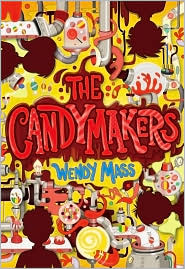
The Candymakers by Wendy Mass


The Candymakers by Wendy Mass
"Four children have been chosen to compete in a national competition to find the tastiest confection in the country. Who will invent a candy more delicious than the Oozing Crunchorama or the Neon Lightning Chew?

Logan, the Candymaker's son, who can detect the color of chocolate by touch alone?

Miles, the boy who is allergic to merry-go-rounds and the color pink?

Daisy, the cheerful girl who can lift a fifty-pound lump of taffy like it's a feather?

Or Philip, the suit-and-tie wearing boy who's always scribbling in a secret notebook?"- summary from Amazon

I don't know how she does it, but Wendy Mass just hits it out of the park with every book I read by her. The way she writes her characters make them compelling, realistic, and hard to leave behind when the book is over. Even though the book is 450 pages (it's a surprisingly quick read), I still felt sad when I got to the last page and had to leave these wonderful characters behind.

What's fun about this book is that it's told in 5 parts- the first four give each character to give their own account of the two days spent at the candy factory and then the fifth goes back to Logan for the night before and day of the contest. It was interesting to read what each character was thinking during a particular scene but it also didn't get repetitive as the same scenes weren't focused on in each part. Not only that, but I really enjoyed the callbacks to previous sections and having to piece the puzzle together as the story went on. What was also cool was the various prior connections between the four kids that come out as the novel goes on.

The humor in this book was fantastic. I was laughing out loud many times during the course of the book. It was wonderful. Also, candy will have to be present while reading this novel because the kids take a tour of a candy factory and of course have to make their own candy as well, and Mass doesn't spare on the descriptions. It was sad for me because I was poor at the time of reading it so I couldn't go out and buy some candy to munch on. It was amazing too to read all the fun candy names and descriptions she came up with for the factory to have, as well as the contest entries too.

I think boys will enjoy this book because who doesn't love to hear about candy and how it's made? Even though there is a female narrator, it's only for about 90 pages and has a fun twist to it that I think boys will really like to hear about.

Overall, this is a wonderful middle-grade novel with a fun and fast storyline but with some great depth to it. A must-read!

Tuesday, October 5, 2010

Ex Machina Vol. 1: The First 100 Days by Brian K. Vaughn and Tony Harris


For some reason that I simply cannot explain, I resisted the comic Ex Machina for a long, long time. This defies reason for me on a number of levels: it's written by one of my favorite writers (Brian K. Vaughn, the man who is at least in part responsible for the single best season of Lost - the season 5 time-traveling arc, for those who care), and it's meticulously illustrated by another favorite, Tony Harris. So why did I, only now, start reading this series? Beats me, but I'm glad I finally climbed aboard. Better late than never.

For those who, like me, haven't joined in for the fun of Ex Machina, the only place to start is with the first collected volume, subtitled The First 100 Days. It chronicles, albeit often artfully out of sequence, the first post-inaugural days of New York Mayor Mitchell Hundred and his political rise to power. Certainly this is novel material for a comic book, but there's a twist. Hundred used to be a super hero in a world where superheroes don't exist. He strangely called himself "The Great Machine" and flew around New York with an oddball aviator-meets-Rocketeer outfit, saving citizens in distress with his strangely-acquired power over all machines. Something happened on the day of 9/11, however, (I haven't gotten to the specifics of what, exactly, yet, so I'm as in the dark as anyone else) that caused Hundred to both reveal his identity and retire The Great Machine forever.

Still not convinced? How about if I tell you that writer Vaughn uses this premise to dig into all sorts of political minutia and arcana from New York history? Or that the series, unlike conventional comics, spends as much time entangled in the political realities of life in New York (protests over a controversial art exhibit, for example) as it does in the throes of superheroics? In short, it's as mature a superhero comic as has been seen in years, and every aspect of its writing and art screams the love of its creators. Like the best comics, Ex Machina works on multiple levels. Those looking for action and adventure will find it in sufficient supply, but those looking for depth of plot and characterization and a wealth of clever dialogue, will find those as well. Like the Greek device that inspired its name, Ex Machina is truly making something divine to help us rise above the mundane.