Tuesday, January 13, 2015

ARES: Bringer of War by George O'Connor

George O'Connor has been busy retelling the Olympic myths using graphic novels for a while now, and the good folks at First Second books have been doing a great job getting the books out. They even have a website for the entire collection. What O'Connor is doing is fascinating. He's not just telling the original versions, but through his artwork and dialogue, is reimagining the stories in a more fleshed-out way.

I am obliged to say that when it comes to Ares, a bunch of the flesh ends up dead in the battle of Troy, since O'Connor chose to inject The Iliad into this book as a means of focusing on Ares, the god of war. While the "facts" from The Iliad are there, rather than focusing solely on the actions of the men on the field, O'Connor focuses on the proxy battles being fought among the gods and goddesses, with an emphasis on their desires and interferences. Further, in an interesting take, O'Connor tackles "daddy issues" in this book by depicting Ares's uneasy relationship with his father, Zeus, and the relationship between Askalaphos, a son of Ares, killed in battle. Whereas Ares thinks Zeus doesn't like him much, and gets confirmation from Zeus, Askalaphos thinks Ares is indifferent to his fate, but we see Ares both mourning and enraged by his son's death in battle.

Monday, January 12, 2015

The Ploughmen by Kim Zupan


In Kim Zupan’s The Ploughmen, there is no country for good men. No easy virtue, no simple truth. Only the land and the loss and the learning to live with it. The high lonesome of the Montana sky, an emptiness formed anew in all who inhabit its vistas.

Friday, January 9, 2015

Play me Backwards

Play Me Backwards

For fans of Andrew Smith's WINGER and GRASSHOPPER JUNGLE comes the latest YA novel by Adam Selzer. PLAY ME BACKWARDS is a hysterical look at the senior year of a slacker named Leon Harris.


Tuesday, January 6, 2015

King Dork, Approximately by Frank Portman

King Dork, Approximately is Frank Portman's third book. His second book is Andromeda Klein and his first is King Dork (see SETH CHRISTENFELD's GLW review here). King Dork, Approximately is the sequel to that first book, King Dork, which I highly recommend you read first. (I also think you should read Andromeda Klein, but not because it has anything to do with the respective King Dork's, but merely because it is, in my humble opinion, the finest of Portman's work.)

If you haven't read the original King Dork, you may safely continue reading this review, but I would move forward with caution. I will try to write the entire review without revealing any juicy or surprising details contained within the first volume, but I may not succeed. If I have to reveal something important, I will introduce it by shouting "SPOILER ALERT!" and jumping up and down while waving my arms. Still, you could miss it if you're reading cavalierly or if you get bored with what I'm saying and decide to skip ahead a couple of paragraphs. So be attentive, ok?

The King Dork books are narrated by Thomas Henderson who, because of the alphabetic proximity of their names, is best friends with Sam Hellerman. Thomas and Sam are in a band whose name changes rather frequently. In fact changing the band's name is whole point of being in the band as, at the outset of King Dork, neither Sam nor Thomas own instruments or know how to play the instruments they lack.

Wednesday, December 31, 2014

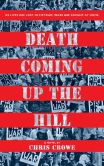
DEATH COMING UP THE HILL by Chris Crowe

Death Coming Up the HillLife is a balancing act for Ashe whose parents have stayed together only because he was born.  Their conflicting opinions of the state of the world in 1968 have pulled them in opposite directions.  Ashe is definitely caught in the middle.


Each week Ashe's history teacher posts a number on the chalkboard.  It's a number all too familiar to Ashe - the U.S. casualty total from the fighting in Vietnam.  Ashe listens to news reports, watches his mother protest the war, and agrees that keeping up his grades so he can go to college and avoid the draft is the best plan.  In the midst of the war abroad, the race war is being fought here at home.  The events of 1968 include the Black Panther movement, the protests and assassination of Martin Luther King, Jr., and the assassination of Bobby Kennedy.


Ashe is pulled in yet another direction when he meets Angela.  Her brother is fighting in Vietnam but hasn't been heard from in months.  Ashe sees the strain it puts on Angela and her family as they wait to hear if he will be reported dead, a captured POW, or MIA.  He'd love to introduce Angela to his parents, but since racism is yet another divisive issue between his parents, he must keep his relationship with Angela to himself.


Author Chris Crowe uses a unique and challenging format for his tale.  DEATH COMING UP THE HILL is told in narrative haiku.  The spare language is precise and powerful.  Readers should be sure to read the Historical and Author's Notes at the end to fully appreciate the complex challenge Crowe faced in creating this amazing work.


Previously posted:
http://readingjunky.blogspot.com/2014/12/death-coming-up-hill-by-chris-crowe.html


Tuesday, December 30, 2014

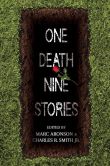
ONE DEATH NINE STORIES edited by Marc Aronson & Charles R. Smith Jr.

One Death, Nine StoriesONE DEATH NINE STORIES is a unique novel comprised of short stories that weave together the story of Kevin Nicholas.  Reports of Kevin's death connect his acquaintances as they tell their individual stories and how they are tied to the deceased nineteen year old.


His sister, his best friend, a passing relationship with a fellow community college student, and an ex-girlfriend are just a few of the contributing storytellers that give readers a glimpse into the intertwined relationships of those who knew Kevin.  Ghosts from Kevin's own past reveal that his relationships were not the positive ones that most would hope for in the life a young man about to begin his adult life.  From the nine different stories, readers will learn about the influences humans have on one another, whether good or bad, and how those experiences combine to shape the players.


This unique collection is the product of two amazing minds, Marc Aronson and Charles R. Smith Jr.*  They tapped nine of their contemporaries to participate in this literary experiment.  Authors Chris Barton, Nora Raleigh Baskin, Marina Budhos, Ellen Hopkins, A.S. King, Torrey Maldonado, Charles R. Smith Jr., Will Weaver, and Rita Williams-Garcia all played a part in creating the cast of characters connected to Kevin Nicholas.  In the Afterword Aronson explains the unique process of creating the individual stories and the resulting complex interaction that brought them together in this interesting format. 


*Aronson and Smith have another multi-author collaboration piece titled PICK-UP GAME.  (I just ordered it and can't wait to read it!)


Previously posted:
http://readingjunky.blogspot.com/2014/12/one-death-nine-stories-edited-by-marc.html

Monday, December 29, 2014

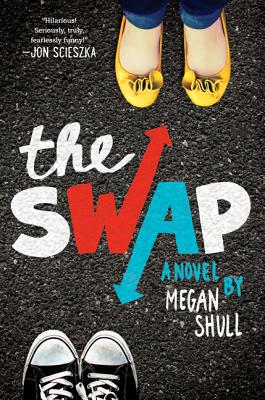
The Swap by Megan Shull

If you like the concept of comedic body switches a la Freaky Friday, then it's time for you to read Megan Shull's novel The Swap.

Note that I said comedic "body switches" as opposed to horror-movie-style body swaps - those are invasive and terrifying, whereas The Swap is a smart and sensitive look at what it would be like for two middle school students of opposite genders to switch places.

When an encounter at school causes them to unwillingly swap bodies, thirteen-year-old Jack and twelve-year-old Ellie have to figure out a way to deal with their very different bodies, families, friends, and afterschool obligations until they can swap back. Before this unexpected event, the kids weren't friends. They go to the same school, so they vaguely knew each other - with Ellie being more aware of Jack than vice-versa - but they are a grade apart and don't have any classes or activities in common. By the time the book is over, though, there's no way they could call themselves strangers anymore.

This story is about more than temporarily being in someone else's body - it's about sharing someone else's life. The decisions the protagonists make and the actions they take while walking in each other's shoes (including Ellie's soccer cleats and Jack's hockey skates) affect them both. Seeing the world through new eyes changes how they see others and how they see themselves.

And back to the body sharing: where some sitcoms, books, or movies might play awkward moments in the locker room and in the bathroom as silly and/or gross jokes, these kids are truly uncomfortable at those times, and ultimately very respectful.

You could say that the two parental figures in the book are both devoted to their children, but they are definitely at opposite ends of the emotional spectrum. Ellie's mother, a divorced single parent and yoga instructor, is upbeat and sunny. Jack's stern father, a widower, is very strict with his four sons. Very strict. Think Captain Von Trapp. He oversees their daily fitness routine and year-round hockey training and makes them call him "sir." Ellie's mom wishes her daughter would be more open with her, while Jack's militaristic dad doesn't do heart-to-heart chats.

Jack has a whole bunch of buddies and gets along very well with his brothers. Meanwhile, only child Ellie feels like she doesn't have a friend in the world. Sassy, her best friend since kindergarten, has found a new best friend and now finds it fun to say mean things to Ellie (and Jack-as-Ellie) at school, on the soccer field, and at a memorable sleepover. Anyone who has had a friend turn on them, especially in middle school, will relate to that heartache. Friendship break-ups can hurt just as much as romantic ones. Not all friends make up; not all friends should. Kids and adults alike should keep this in mind: If someone is being mean to you and repeatedly putting you down, that person is not a true friend.

Both Ellie and Jack are healthy and athletic, which is really cool. It also comes in handy when they have attend each other's practices and tryouts. I also appreciated that the sports storylines didn't culminate in either character winning the big game or being chosen MVP; instead, it was about personal successes, about what the work taught them about themselves and how it pushed them outside of their comfort zones. There was also a neat sporty bit towards the end of the book that I wasn't expecting, and I liked a lot.

I've read a lot of books with dual narratives, and The Swap is a solid example of a story that both needs and benefits from two narrators who offer honest first-person thoughts. Without making them polar opposites, Shull has her characters speak and react differently, with some overlap - it's fun when they start realizing that they've picked up each other's lingo. The narrating duties flip back and forth in alternating chapters, and the story is easy to follow. The Swap considers the different ways we treat girls and boys, the different things we expect of our sons and daughters, and it's a great take on upper middle school life, a time that a lot of TV shows glaze over, jumping from little-kid-dom right into the teen age rather than dealing with the simultaneous horrors and happiness of those in-between wonder years.

For those of who you have yet to read the original novel Freaky Friday by Mary Rodgers, do yourself a favor and pick up that book at the same time you pick up The Swap. Also grab Megan Shull's previous releases, including Amazing Grace.

Friday, December 26, 2014

I Am A Genius of Unsprakable Evil and I Want to be Your Class President

(Originally posted on my personal blog.)

I Am a Genius of Unspeakable Evil and I Want to Be Your Class President
I first picked up I Am A Genius of Unspeakable Evil and I Want to Be Your Class President based on its deliciously verbose title and its endorsement from Jon Stewart (“If War and Peace had a baby with The Breakfast Club and then left the baby to be raised by wolves, this book would be the result. I loved it.”) When I discovered that its author was one of Stewart’s executive producers, and that it had come out in paperback, I could no longer resist its evil, evil charms.

I was quite wrong about it, though. I thought Genius was going to be more or less realistic fiction about an over-intelligent, misanthropic kid running for student body. As it turns out, I was a tiny bit wrong about that “realistic fiction” bit. The story’s protagonist is Oliver Watson, a thirteen-year-old kid who may be overweight but who is also the third wealthiest person in the world. An evil genius, he built his fortune from a single petty crime (stealing some money from his mother’s purse)  and carved out an empire of subterranean tunnels accessible from his bedroom or a secret locker passageway. He’s a blimp-piloting, minion-smacking, evil gadget-inventing mastermind who, as a seventh grader, holds the strings of any number of puppet corporations and countries.

Oliver is determined not to divulge his crazily successful alter ego, and so he lives his life as a very convincing idiot. He’s got everyone fooled into thinking his shoe size exceeds his IQ – classmates, teachers, even his mother and, importantly, his father. It turns out that Oliver is motivated, not by greed, respect, or a desire to change the world, but by a consuming dislike for what he sees as his self-interested and small-minded father.

He’s also motivated by puppy love, but that’s another story.

As Oliver’s best intentions fall apart around him, he ends up in an amusingly messed-up race for student body president, gets cut down a size or two, and maybe even grows up a little bit. But that’s not why you should read it; you should read it for the footnotes.

I’d say that Genius would be what happened if a Daily Show writer re-wrote Catcher in the Rye as a superhero comic book, but since that’s basically what this is, I guess I’ll just say that if you're ready for a good, smart laugh, find yourself a copy and buckle your seatbelt.

Monday, December 22, 2014

A few more book recommendations for procrastinating gift-givers

For kids who like tales about intelligent rodents and/or planes: Lindbergh: The Tale of a Flying Mouse by Torben Kuhlmann. A mouse whose compatriots have fled the country due to the introduction of a new mechanical mousetrap is unable to leave himself. Mistaking bats for flying mice, he is inspired to create a flying machine of his own so that he, too, can escape. Yeah, this is a picture book so it skews younger than the Guys Lit Wire intended audience, but the story is inventive and the artwork flat-out stunning. One of my favorites in a year of outstanding picture books, I've been pushing this on readers of all ages.

For superhero comic book fans: Super Graphic: A Visual Guide to the Comic Book Universe by Tim Leong uses infographics (a few samples) to chart the world of comics.

For precocious or aspiring foodies: Anything That Moves: Renegade Chefs, Fearless Eaters, and the Making of a New American Food Culture by Dana Goodyear is a wild look at adventurous eaters and food movements, in a very New Yorker way (Goodyear writes for the magazine). Dan Barber's The Third Plate: Field Notes on the Future of Food is a more detailed look at agriculture, sustainability, nutrition, and food traditions. Hmm, I made that sound really boring, but the book is full of fascinating people and information. While the viewpoint is limited, it does provide a lot of, well, food for thought, especially for people who care about food.

For readers looking for a character they can really root for: I'm not the only person calling The Martian by Andy Weir a favorite book of this year. Partly because it's really smart, partly because it's really funny, partly because it's really suspenseful. (I mean, there must be a reason so many A-list names are involved in the film adaptation, right?) But I wonder if, in a year that has seen so much despair and senseless violence, The Martian's optimism and perhaps old-fashioned can-do attitude has provided a much needed antidote for readers. In any case, I highly recommend this both to science fiction fans and science fiction avoiders--it is that awesome a book.

Friday, December 19, 2014

Book Review: Escape from Sobibor by Richard Rashke


Escape from Sobi­bor by Richard Rashke is a non-fiction book which details the biggest escape from a Nazi con­cen­tra­tion camp in Poland dur­ing World War II.  The book was first pub­lished in 1982 and won acclaim world wide.Escape from Sobibor by Richard Rashke is an excit­ing his­tory book, told as a novel. The book is divided into three sec­tions which intro­duce the peo­ple, tell about the escape from a top secret Nazi death camp, and the after war years. 

Mr. Rashke knows that the strength of any book, non-fiction or oth­er­wise, is the per­sonal sto­ries which make up the big pic­ture, and does a great job intro­duc­ing us to them. The peo­ple which the author chose to focus on were non-military Jews and a Russ­ian offi­cer, some were pulled out of the lines for the gas cham­bers due to spe­cial skills and some just by pure luck.

The author engages the reader from the start with per­sonal pre-war sto­ries. This is not just a his­tory book about the escape itself, but about peo­ple we care about and the heart wrench­ing deci­sion they had to make in order to survive.

The cru­elty and bar­bar­ity of the Nazis is also talked about, con­trasted by the strength of char­ac­ter of the pris­on­ers, as well as their men­tal anguish. Unfor­tu­nately, many of the Nazi crim­i­nals were never pun­ished for the their actions and brutality.

Once the pris­on­ers escaped, the author details their strug­gle to sur­vive in a hos­tile envi­ron­ment, either hid­ing from the Nazis, being take advan­tage of by the local pop­u­la­tion or the par­ti­sans. Some of the escapees hap­pened upon brave peo­ple who helped them, some were not so lucky.

Some of the sur­vivors were still liv­ing at the time the book was pub­lished, a few even took up arms and went back to fight the Nazis. This book has many themes about sur­vival, free­dom and more.

A must read for any his­tory buff or World War II enthu­si­ast. This mov­ing book might be grim, it is also inspir­ing and vividly recounts an event which most of the world has never known before it was published.

Originally published as  Book Review: Escape from Sobibor by Richard Rashke on ManOfLaBook.com