Tuesday, September 20, 2011

Mind-controlled Video Games but Probably not a Robot Butler


Here's something we old people know: futurists are notoriously bad at predicting the future. As a kid I remember reading a futurist, who, seeing the expansion of robotic and computer technologies in the 70s and 80s, predicted that in the 21st century the typical American work week would be no longer than 25 hours. He then went on to speculate about how we would spend all of our newfound leisure. This futurist's mistake was that he forgot to factor in competition in the marketplace. Robots and computers did spread, but once every company had robots and computers, the only way to get an edge was to work the humans a little harder. Thus, the typical work week actually got longer.

Still, while it may be tough to predict what's coming, you'd be silly to look at our world not think, Wow, the future is gonna be crazy. How can one prepare?

Monday, September 19, 2011

Underdogs by Markus Zusak

Before Markus Zusak wrote the insanely popular novel, The Book Thief, he wrote three books about the Wolfe Brothers. Readers can catch up on this series by checking out Underdogs, which combines the trilogy into one volume.

The Underdog is Zusak's first novel that was originally published in Australia. This series is told from the viewpoint of Cameron, the youngest of the Wolfe family who greatly desires to grow beyond his hardscrabble upbringing and become something more. In The Underdog, Cameron and his brother Ruben constantly fight, terrorize the neighbor’s dog and prowl the neighborhood looking for trouble. Their mother is embarrassed and abhorred at their behavior calling them "animals".

Fueled by his crush on a girl he meets while working and some disturbing dreams, Cameron begins to make changes and fight back against his reputation as a loser. It is interesting to read this earliest work from Zusak and see how his writing has improved, but the vivid characters and engaging stories were there from the beginning.

In Fighting Ruben Wolfe, Cameron and Ruben become part of an underground fighting ring. Fighting for their self respect, both brothers, including small and young Cameron fight weekly for tips. While Ruben destroys all of his opponents, Cameron scraps his way through the season. In the last fight of the year, the matchup falls on Cameron and Ruben to fight each other.

The last of the trilogy, Getting the Girl, begins with the Wolfe brothers and Ruben's girlfriend, Octavia making beer ice blocks as a way to split the only drink in the house. Cameron falls for Octavia, who Ruben soon becomes bored with. After they split, Cameron begins dating Octavia, until he is verbally destroyed and betrayed by Ruben. Cameron begins writing, keeps fighting to get Octavia back and proves his own strength by saving Ruben himself.

All three of the novels are short, fast-paced and humorous. It is wonderful to follow Cameron deciding what type of person he wants to be and fighting to get to that end. Fans of any of Zusak's other works, especially I am the Messenger, should read through this trilogy.

Wednesday, September 14, 2011

four wheels bad, two wheels good

I have owned a bike of some sort or another since I was seven years old but only owned a car for a handful of years in my adult life. This isn't a holier-than-thou stance it's just a fact. When I was young a bike was a means of freedom, a way to expand my range from home, as it were. In high school and college it was a low-cost and practical alternative to public transit and the added expense of car ownership. As an adult I have come to a point where I am happier to live and work close enough that a bike is all I need. Which isn't to say that haven't and don't own a car, or that I don't use them, simply that it has always been important to me that a bike be part of the equation.

Earlier this year I started to think more about bikes and have come to believe that they are a vital and important part of our future. They can improve out health both physically and mentally, help reduce carbon emissions and oil dependency, and rebuild communities, all politics- and hyperbole-free.

In some ways this is a follow-up to Grazianohmygod's post a few weeks ago touting David Byrne's Bicycle Diaries. I have had an eye out for books on cycling that weren't hardcore shop manuals or insider tomes aimed at fixed-gear hipsters. What I wanted was something that laid out the argument for bikes without sounding like rabid dogma, and while the title The Cyclists Manifesto: The Case for Riding on Two Wheels Instead of Four by Robert Hurst might sound like an edgy hate-filled rant it isn't. And when Hurst says in the opening pages that he doesn't believe that the bicycle is the answer to all of our problems, he's lying, and he goes to great and subtle lengths to prove himself wrong.

Tuesday, September 13, 2011

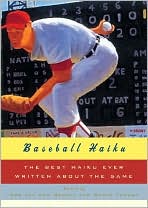
BASEBALL HAIKU, ed. van den Heuvel & Tamura

It's almost playoff season, so today, I'm talking about baseball - specifically, I'm talking about a book that's a few years old now, Baseball Haiku: The Best Haiku Ever Written About the Game, edited by Cor van den Heuvel and Nanae Tamura.

This book of poetry is one that I found in the "sports" section of the book store when it came out, which gives you some idea exactly how sports-oriented it is. The book is intended for adults, but there’s no reason that baseball-lovers of all ages wouldn’t enjoy it (apart from a lack of pictures for the very young, that is).

Friday, September 9, 2011

The Three Stigmata of Palmer Eldritch

Philip K. Dick’s The Three Stigmata of Palmer Eldritch hasn’t received the same attention as the movie-spawning Do Androids Dream of Electric Sheep or A Scanner Darkly, but it offers a richly painted future universe as well as an exploration of what identity comes to mean in an age of inescapable influence.

Wednesday, September 7, 2011

The Reader's Advisory Guide to Nonfiction


Well, I do a review a month here, and never seem to know very far in advance what I will review. I consider a few titles, and hope I come up with one that may be useful, or at least interesting.

I settled on The Reader's Advisory Guide to Nonfiction this time. Neal Wyatt's book has chapters recommending books about sports, travel, true crime, true adventure, memoirs, history and biographies, "general nonfiction," whatever that is, and so on. Science, mathematics, and nature writing are all dealt with in one chapter, as are food and cooking.

It was published in 2007, so you will not find the most recently published nonfiction in it. That is not a problem, in my opinion.

Tuesday, September 6, 2011

A Nuclear Option


Santa Fe, NM, if you've never been there, is a truly beautiful city full of adobe houses and free thinkers and great restaurants and a truly heterogeneous local culture. It also happens to be within blast radius of Los Alamos National Laboratory where the first nuclear weapons were developed and where atomic science continues to this day.

Julia Platt Leonard uses all of these aspects of Santa Fe in her new thriller and debut novel Cold Case. Thirteen year-old Austin "Oz" Keillor, hoping one day to become an accomplished chef, helps out at the family restaurant, Chez Isabelle, where his older brother serves as head chef. Early one Saturday morning, while his mother is out of the country, Oz comes in to clean the place and discovers a dead body, a murdered bodied, stashed in the walk in. What's worse, his brother's name is on a note in the victim's pocket. When the cops arrest Oz's brother, it's up to Oz and a couple of his friends to keep the restaurant going and find out who really committed the murder. As Oz uncovers clues it becomes more and more clear that all of this has to do with Oz's father, a Los Alamos scientist, now dead, but long suspected of selling the nation's nuclear secrets.

Sunday, September 4, 2011

The View from Star Trek's Bridge

There are a lot of Hollywood memoirs out there, and most of them are, well, junk. “Written” by a star of the moment, they convey carefully market-researched, harmless or deliberately “controversial” stories designed to make you buy not only the book, but whatever other products the star is shilling.


The View from the Bridge, Nicholas Meyer’s 2009 account of his involvement in Star Trek, is different.

Friday, September 2, 2011

The Midnight Palace -- Carlos Ruiz Zafón

Calcutta, 1916: A British officer sacrifices himself to save two babies from an evil figure determined to wipe their entire bloodline out of existence.

The twins are then separated in an effort to keep their identities a secret.

Calcutta, 1932: The day the twins turn sixteen, it is immediately obvious that that effort was All For Naught.

Jawahal is coming for them, and he's coming for them now.