Friday, November 7, 2008

The Screwed-Up Life of Charlie the Second -- Drew Ferguson

Upon being asked about what I was reading by a couple of guys my age:
Me: Oh, it's called The Screwed-Up Life of Charlie the Second. I'm about half-way through. Not much has happened yet, except that Charlie just got his first boyfriend. Other
than that, there's been a masturbation scene on, like, every other page.

Guy 1 and Guy 2 look at each other.

Guy 1: How old is this kid?

Me: He's a senior in high school.

Guy 1 and Guy 2 look at each other again.

Both guys, in unison: Yep, sounds about right.

Charles James Stewart, II -- Charles the Second, not Charles, Jr., even though his father bears the same name -- is known as Charlie to his friends, as Chip at his running-for-state-attorney father's press conferences, and as Smart-Ass at home. He's never particularly fit in at school, drives his parents crazy (the feeling is mutual), lusts after his unfortunately straight best friend Bink (and Bink's brothers, for that matter), has failed his driver's test six times, can't seem to get his college essays written, and has never had a boyfriend.

That last part is about to change.

The Screwed-Up Life of Charlie the Second is not an action-packed book. It's about a guy in high school. There are no car chases,government conspiracies or evil geniuses. He is not a vampire. So if that's what you're looking for, you'll probably want to look elsewhere. But if reading about a Midwestern, Lutheran, gay Adrian Mole sounds attractive, you're in for a treat.

It had a fantastic opening paragraph:

Okay, so maybe getting my scrawny ass pushed into the back of a Crystal Lake cop car wasn't the smartest thing I've done, but Dana's party last night--it sucked. She should thank me. The only thing anyone'll remember about the party is me being busted.

but it still did take me a little while for me to get into the book. Once Charlie won me over, though, once I was invested, I didn't put the book down -- I just sat where I was and read the whole thing in one go.

Charlie's smart and sarcastic and frustrated and funny, but some people might find his voice off-putting -- his descriptions of sex (whether, to use his term, "making knuckle babies" or with a partner) are pretty graphic and his descriptions of other people, while vivid and probably apt, can be somewhat cruel. I, personally, really enjoyed him.

The sometimes prickliness of his voice helped to make him more real for me, and by the end of the book, I felt more like I'd read a memoir than a novel. Charlie felt that real to me. And, of course, it helped that the dialogue was very well done, that I loved the secondary characters -- especially Bink and his family -- and that the situations Charlie would find himself in (sometimes through his own doings, sometimes not so much) always seemed within the realm of everyday life.

By the end of the book, I had to physically restrain myself from cheering for Charlie. (I was in public.)

--Crossposted at Bookshelves of Doom--

Thursday, November 6, 2008

Book Review- Soulless by Christopher Golden


Soulless by Christopher Golden
From the back cover:

"Times Square, New York City: The first ever mass séance is broadcasting live on the Sunrise morning show. If it works, the spirits of the departed on the other side will have a brief window -- just a few minutes -- to send a final message to their grieving loved ones. Clasping hands in an impenetrable grip, three mediums call to their spirit guides as the audience looks on in breathless anticipation. The mediums slump over, slackjawed -- catatonic. And in cemeteries surrounding Manhattan, fragments of old corpses dig themselves out of the ground....

The spirits have returned. The dead are walking. They will seek out those who loved them in life, those they left behind...but they are savage and they are hungry. They are no longer your mother or father, your brother or sister, your best friend or lover. They are soulless. The horror spreads quickly, droves of the ravenous dead seeking out the living -- shredding flesh from bone, feeding. But a disparate group of unlikely heroes -- two headstrong college rivals, a troubled gang member, a teenage pop star and her bodyguard -- is making its way to the center of the nightmare, fighting to protect their loved ones, fighting for their lives, and fighting to end the madness."

As you may or may not remember, I posted a review of Golden's other new YA book Poison Ink last month, and wasn't completely enthralled with it. Reading this book COMPLETELY changed my opinion of Golden and his writing. This book gripped me from the first page, and kept me reading. I found it difficult to put the book down. It's much more gory than Poison Ink since zombies are involved. It's a fast-paced book, which I thought Poison Ink lacked, and events happen right away in this story, compelling the reader along. I also loved the variety of characters that Golden talks about- he does a great job fleshing all of them out and giving them unique personalities, and all of them come from different walks of life, yet they band together to end this horror because they have a common goal. The ending is unexpected and a fitting way to conclude this horrific story. This is a fantastic novel, and one that will not leave you once you finish and close the book.

Oh, and be sure to read this with the lights on. And during the day. Otherwise, you'll be up all night.

Wednesday, November 5, 2008

Apocalypse 2012 by Lawrence Joseph


Change has been on everyone's lips recently. Americans voted for it yesterday. Unfortunately not all change is for the better. In Apocalypse 2012 Lawrence Joseph writes about a number of disasters that might befall the earth, changing (or wiping out) life as we know it. Asteroid strikes, super-volcanoes, and maganetic polar shifts are just the beginning.

Mayan astonomers predicted a great change would occur on December 21, 2012, a date which marked the end of a 20,000 year era and signified the beginning of a new one. Some have interpreted that as the end of the world, others a shift in consciousness among the people of the Earth. Lawrence Joseph was going through a divorce and so he wrote a book leaning towards a bleaker outlook.

Apocalypse 2012 is not a fantastic book, but it is a fascinating one, if a bit depressing. Joseph talks about the Mayan culture and investigates they way they thought about history as well as chronicling the doom of the human species via catastrophe. Some might argue that 2012 might usher in an age of peace and understanding, a shift to a higher consciousness, or the Rapture. Joseph doesn't argue against any of those things, simply states the case that the Earth is overdue for violent and drastic change, and does so in a pretty interesting way.

Tuesday, November 4, 2008

Enjoy being a male, a human male anyway


It's election day and I expect we're all tired of politics. So instead let's talk about sex.

If you're a young man--the intended audience of this site--it's possible that you've been thinking so much about sex that you've barely noticed an election was going on anyway. Having once been a young man (I'm still a man) I know how it is. It's enough to drive you mad. There's the sex drive, combined with a debilitating fear of potential mates, combined with feelings of inadequacy around other males . . . well, that was me anyway.

If you've got problems like this you could call into a sex talk show on the radio like Dr. Drew's Lovelines, or you could read Dr. Tatiana's Sex Advice for all Creation. If you take the latter route, you may not get actual advice for resolving your sexual concerns; Dr. Tatiana, after all, doesn't specialize in human sexuality and in fact mentions humans only in passing. But by reading the advice she offers to creatures as diverse as fruitflies, sponge lice, honey bees, fig wasps, lions and chimpanzees you'll definitely get a different perspecitive on sexuality and its place in the world.

Dr. Tatiana is the alter ego of evolutionary biologist Olivia Judson. In Dr. Tatania's Sex Advice for All Creation she responds in advice columnist form to the sexual concerns of animals of all sorts. Here's an example of a letter she might receive:

Dear Dr. Tatiana,
I'm a queen bee, and I'm worried. All my lovers leave their genitals inside me and then drop dead. Is this normal?
  Perplexed in Cloverhill

or

Dear Dr. Tatiana,
I'm a yellow dung fly and I've heard rumors that in my species sperm are actually chosen by the egg. Is this true, and if so, what can I do to make my sperm more attractive?
  The Dandy on the Cowpat


Reading these accounts, and the good Doctor's responses, can be, for a human, a strangely comforting experience.

If, for instance, you've learned that your girlfriend is cheating on you, Dr. Tatiana will help you understand that in the animal kingdom you have plenty of company. Early in the book, Dr. Tatiana dispels completely the notion that philandering a primarily a male activity. In nature, it turns out, it's quite the reverse. There are any number of reasons for females to seek multiple mates. They might, for instance, be looking for genetic variety, or may want to encourage competition between sperm or may want simply to make all the males in their community suspect that some of their children might be theirs which helps limit infanticide (nice, eh?). It turns out, according to Dr. Tatiania, that promiscuity among females makes a species more robust.

What Dr. Tatiana (or Olivia Judson through her) does so well, though, is not just present and describe the sexually odd and unusual, but describes how such varied sexual practices have evolved via the competition between individuals to pass on ones genes. Male members of species with promiscuous females, for instance, quickly evolve ways to limit promiscuity since every other male a female mates which reduces each individual male's chances of passing on his genes. Thus, after copulating the stick bug male coplulates with the female for over six weeks, preventing rivals from getting to her; the house mouse actually seals off the female's reproductive tract with an impenetrable plug after he deposits his sperm, creating a sort of chastity belt; even bolder the the spiny headed worm Moniliformis dubius can not only seal off the female's reproductive tract with a kind of cement but can even use its cement to seal off rivals' penises. This is not the worst thing to happen to a male in this evolutionary battle. Some species of bees actually explode after mating with the queen, leaving only their penises behind to block the way for rivals. A particular species of slug, Dr. Tatiana mischeivously reports, often gnaws off its own penis after sex to acheive something of the same end. The fruit fly Drosophila bifurca grows a sperm with a tail twenty times its own length. No one knows exactly why, but it may be to knock rival sperm out of the way.

See, fellow human males? See how much worse it could be?

There seems to be no end to what males in nature will do for a chance to mate. The natural world is a veritable treasure trove of highly inventive and often downright dirty tricks. Dr. Tatiana tells the tale of the sponge louse, whose males come in three varietys. The alpha males, as their name implies, are big muscular brutes who preside over complete harems. The harems, however, are infiltrated with beta males, a smaller version which looks just like a female and, posing as a member of the harem, has its way with the females behind the alpha males back. It gets weirder. There are also gamma males, who are even smaller and disguise themselves as the alpha male's offspring, also in order to sneak a few special moments with the females.

And you thought the dating game in high school was bad.

It goes on and on. Offering helpful advice to insects, arachnids, a variety of bacteria, numerous mollusks and jellyfish, and the full range of vertebrates, Dr. Tatiana cheerfully exposes the weirdest sex tales in all of creation.

And then she asks the most frightening question of all: "Are Men Necessary?" I bet you can guess the answer.

Calm down. For now, at least, human men are most definitely necessary. Enjoy being one.


Monday, November 3, 2008

Tracie Vaughn Zimmer


Last week, I asked author Helen Hemphill how she felt about writing for guys and writing from a male perspective. This weekend, I posed some of the same questions to author Tracie Vaughn Zimmer, whose newest novel for kids, The Floating Circus, involves an injured orphan boy, a freed slave, an elephant, and a circus boat.

Do you approach your stories differently depending on the gender of your protagonist?

I'd like to say no, but when I wrote The Floating Circus I really concentrated on what my 12 year-old son, Cole, would like to read and I know that influenced my choices to make it feel more adventure-novel than historical.

Do you feel comfortable writing in a male voice? What are the challenges you face when writing in a male voice - and/or writing for boys?

As a writer, I get to access that part of myself which is more masculine, and that's lucky because in society we don't allow ourselves much wiggle room in this arena without serious social repercussions. I will tell you that the cadence, word choice and rhythm of Solomon's words is based off the way my dad speaks. I hear his voice whenever I read Solomon's words.

Your first and second novels (Reaching for Sun, 42 Miles) were narrated by girls, your third (The Floating Circus) by a boy. Do you feel as though there are 'girl books' and 'boy books?' Do you, like me, try to get those gender-based divisions out of the minds of readers?

I think girls have the advantage here because they don't feel self-conscious about reading whatever books they want. Anything I can do as a teacher to expand wider appeal, I try to do. I'm always pushing books on kids no matter their gender!

The Floating Circus is your first prose novel, as the two which preceded it were verse novels. Was Circus ever planned to be poetry? Did it feel strange (for lack of a better word) to write in prose?

After many years, I had developed a certain confidence in writing free verse poetry and I was uncertain whether I could reach this milestone in prose. Cheerleading from my writing partner, Julia Durango and my editor, Melanie Cecka, really helped when my insecurities had a carnival inside my head.

The title of The Floating Circus changed at least once, didn't it? Did the storyline or ending ever change?

It was originally titled The River Palace but we thought the word "palace" might not appeal to boys (see, that gender issue again) and Shannon Hale's River Secrets was on the same list. That was one too many rivers!

The appearance of Little Bet was as big a surprise to me as it is to Owen. When I revised the story I weaved Little Bet more completely into earlier scenes. This was one of those magical moments that kept me chained to my laptop!

Were they transported into present-day, what do you think Owen or Solomon would make of our contemporary world?

I think Owen would be enthralled with all the technology (and probably love YouTube like my own son) in the same way he was astonished by the Palace’s technology of that time. Solomon, I hope, would meet only people who deserved to know him.

Do you prefer to write in first-person or third-person? Is that decision influenced by the gender of your protagonist?

I really struggle with point-of-view in my books. I like how immediate first-person feels (though this is one issue that has nothing to do with gender) but I think it is confining. Third person has that wonderful storyteller’s distance but can sometimes make the reader feel removed from the main character.

When your kids were little, what were their favorite books?

Abbie LOVED anything by Lisa Wheeler. Here is a link to her 'reading' her favorite one at four. Cole loved classic children's lit stories like Corduroy, Goodnight Moon, and Harry the Dirty Dog.

What do they like to read now?

Now Abbie likes, and I quote here, "pretty much anything by Cynthia Rylant." Cole may be Margaret Peterson Haddix's biggest fan.

----

The Floating Circus is now available in stores and libraries everywhere.

Read my 2007 interview with Tracie Vaughn Zimmer.

Visit the author's website.

Sunday, November 2, 2008

Why Vote?

(This is from the 57th section of Carl Sandburg's "The People, Yes.")

LINCOLN?
He was a mystery in smoke and flags
saying yes to the smoke, yes to the flags,
yes to the paradoxes of democracy,
yes to the hopes of government
of the people by the people for the people,
no to debauchery of the public mind,
no to personal malice nursed and fed,
yes to the Constitution when a help,
no to the Constitution when a hindrance,
yes to man as a struggler amid illusions,
each man fated to answer for himself:
Which of the faiths and illusions of mankind
must I choose for my own sustaining light
to bring me beyond the present wilderness?

Lincoln? was he a poet?
and did he write verses?
"I have not willingly planted a thorn
in any man's bosom."
"I shall do nothing through malice; what
I deal with is too vast for malice."

Death was in the air.
So was birth.
What was dying few could say.
What was being born none could know.

He took the wheel in a lashing roaring
hurricane.
And by what compass did he steer the course
of the ship?
"My policy is to have no policy," he said in
the early months,
And three years later, "I have been controlled by events."

See you at the polls!

Friday, October 31, 2008

"The Skull Of Truth" by Bruce Coville - Cemeteries, Magic, and Creepy Fun!


Charlie has a problem with the truth. Nobody believes him anyway, so he's gotten used to lying all the time. And while he's no thief, when he sees the skull in Mr. S.H. Elives' Magic Shop, he's compelled to swipe it.

Turns out it's not just any skull... It talks to Charlie in his head, tells jokes, and oh, yeah...

it's cursed.


The curse forces Charlie, and anyone near the skull, to tell the truth. What do I mean?

Like everyone in his family revealing they hate his aunt Hilda's green Jell-O and cottage cheese salad.

Like family secrets about his Mom and his favorite Uncle Bennie that were in hiding and are now blurted out.

Like mortifying Charlie himself when his best friend, Gilbert, who has lost all his hair to cancer treatments, asks Charlie if he really looks that bad and Charlie answers truthfully:

"I think it looks totally doofy," he said. "And I hope to God it never happens to me."


This stupid Skull of Truth is ruining Charlie's life. And it won't shut up!

But maybe there's a way Charlie can fix things with Gilbert, deal with the bully Mark, and even stop developers from paving over the swamp he loves... If he can just figure out what to do with the truth!

I really loved this middle grade book - it's spooky without being completely scary, and for a book with a lot of laughs and thrills, Charlie has a huge heart and we really want him to figure it all out. Even the "villains" are three dimensional, and nothing's quite as good or evil as Charlie thinks it is at the beginning of his journey.

There's also a subplot about Charlie finding out that an adult in his life is gay. It's a shock for him, and his coming to terms with that truth about someone he cares about is handled beautifully.

Truth can be complicated, and after a great fun ride, "The Skull Of Truth" left me with lots to think about.

Happy Halloween from everyone at Guys Lit Wire!


Thursday, October 30, 2008

Kelly LInk's surreal "Pretty Monsters"


I've been a fan of Kelly Link's for quite some time and was quite pleased to see her new YA collection, Pretty Monsters. Including stories published in various publications over the past few years plus the new titles story, this collection should introduce a whole new group of readers to Link's incredibly unusual way of seeing the world. Here's a bit of my review from the current issue of Bookslut:

There are several standouts for me in Pretty Monsters starting with the first story, “The Wrong Grave.” Riffing on the true story of Dante Gabriel Rossetti and Elizabeth Siddal, Link references everything from Buffy to Survivor as she writes about Miles Sperry who decided to dig up his dead girlfriend and recover some poems he had melodramatically buried with her (they were the only copies of course). Miles digs up the wrong girl and finds himself instead with “Gloria” who is not at all like the dead Bethany and not interested in Miles's reasons for disturbing her peace. Gloria has been a bit bored it seems and Miles becomes her new diversion -- no matter how hard he tries to get away. It seems a cliché to say the ending is a shocker, but it is and it is splendid and Gloria is pretty much my new ghost hero.

“The Specialist’s Hat” has gained a lot of attention for its spin on babysitters with bedtime stories and still manages to creep me out every single time I read it. (Knowing what will happen next in this one does not diminish it -- if anything the tension builds even more in anticipation of the final page.) “Magic for Beginners” defies expectations and assumptions every step of the way as it follows teenage fans of an unscheduled unexplainable television show who group together to discuss its every twist and turn. The fact that the story’s plot also involves a phone booth bequeathed to the main character and a love triangle (or more) makes it both odd and typical. This is coming-of-age of the decidedly Addams Familyesque kind but crossed as well with a healthy dose of X-Files paranoia. Smart and snappy, “Magic for Beginners” is one of my all-time favorite short stories.


If you are a fan of stories with a twist then you need to read Kelly Link. She's in a class of her own and offers a startling new way to both write and enjoy a good story.

Wednesday, October 29, 2008

Helen Hemphill

To date, Helen Hemphill has released three novels, two of which have had male protagonists. When we spoke earlier this month, I asked her how she felt about writing for guys and writing from a male perspective.

Do you approach your stories differently depending on the gender of your protagonist?

I don't really have a different approach if I write across gender. When I worked on Long Gone Daddy, I checked in with the Gender Genie occasionally to make sure I was on track for a male voice, but I haven't done that recently. Given a text sample, Gender Genie uses a simplified algorithm to predict the gender of the writer. I used it to make sure the narrative of Long Gone Daddy was masculine in its feel and perception. Now, I really do try to be in the character's mind set, using some of the techniques of Uta Hagan's book Respect for Acting. Once I am grounding in the voice, I don't worry as much about the gender; it just comes along naturally.


Do you feel comfortable writing a male voice? or: What are the challenges you face when writing in a male voice - and/or writing for boys?

I do feel comfortable writing a male voice. I have two [now adult] sons of my own, and I think my own personality is to be rather straightforward, so both of those things help. The challenges are clearly in word choice, and I began using a vocabulary journal while writing Runaround. The other difference is emotional reaction. Boys react differently to emotional upheaval; they can be more restrained or more angry when emotional events happen. I try to be aware of that and sensitive to it.

Your second novel, Runaround, was the story of young girl named Sassy growing up in the sixties. Do you feel as though there are 'girl books' and 'boy books?' Do you, like me, want to break that division or assumptions?

I don't know if that's totally possible. I'd love to believe that there are just good stories, and gender doesn't play a role in a reader's selection of text, but I do think boys are drawn to certain kinds of stories and girls are drawn to certain kinds of stories. As adults, I just think we should honor young reader's choices and not try to push one direction or another. Good readers eventually branch out and read lots of different kinds of material, and that's what we all ultimately want children to do.

Do you prefer to write in first-person or third-person? Is that decision influenced by the gender of your protagonist?

I don't have a preference; it's just how I hear that particular voice. Gender doesn't play a part either. I think it's some bigger aspect of the story I'm trying to tell. How close do I need to be to that protagonist and how limited I'm willing to be in vocabulary are factors, but that's part of the larger structure of the story.

What compels you to write historical fiction? What compels you to write contemporary fiction?

Again, it's the story. If I'm attracted to the premise of the story so much that I have to work on it, then it doesn't matter what the time frame or the landscape of the novel. It's all about story.

Give us a preview of your new book, The Adventurous Deeds of Deadwood Jones.

It's a wild ride adventure story for boys about two cousins, Prometheus Jones and Omer Lovejoy Shine who head west to find opportunity and to look for Prometheus's father. Like most of the cowboys of the real west, the boys are young, 14 and 11, and have to face the hardships of living on the land while working a cattle drive. The unique aspect of this story is that the boys are African American, and they find the west a genuine place of opportunity, where a man is judged on his ability. That doesn't mean they don't find prejudice as well, but the cattle drive allows the boys to test their grit and learn about themselves.

What inspired you to write Adventures?

I read Nat Love's autobiography a couple of years ago and loved his bravado voice. Nat was an African-American cowboy who was born in Nashville at the end of the Civil War and went west to find his fortune. Nat was the best at everything - the best shot, the best wrangler, the best cowhand - and I was inspired to write a story about a boy who was like Nat, yet also different from him. There was also a wonderful opportunity to write about one of the 5,000 African American cowboys who worked the cattle drives in the late 1800s. The contributions of those Americans were a story that hadn't been told widely, and I thought it was important. Plus, who wouldn't want to write an adventure story about cowboys? It was fun!

When your sons were little, what were their favorite books?

When they were little, they were fond of Mr. Popper's Penquins, the mysteries of Cynthia DeFelice, and Sports Illustrated for Kids. As teens, they both jumped right into adult fiction. My youngest son Michael is a huge fan of Harper Lee's To Kill a Mockingbird and Mario Puzo's The Godfather. Our oldest Robert loves nonfiction sports books, most recently Carl Hiaasen's The Downhill Lie: A Hacker's Return to a Ruinous Sport.

----

The Adventurous Deeds of Deadwood Jones will hit stores in November 2008.

Read my 2007 interview with Helen Hemphill.

Visit the author's website.

Tuesday, October 28, 2008

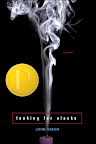
Looking for Alaska by John Green

Looking for Alaska made me think about death, and what happens after we die. And it made me think about the ways in which emotional pain can be as deadly as physical pain. It made me think about my friend who studies religion and has expressed some of the same ideas as Green (who also studied religion). It also made me think about belonging, and what it meant to me as a teen, and what it means to teens I know. It made me think about what, exactly, home is.


The narrator is Miles, a high school junior, who goes away to boarding school. There, he meets a group of friends, the first group of friends he's had in his life. In his old school he was an outcast, but the sense of belonging he feels at this new school triggers a lot of growth in him. This reminded me of a boy I know, who was an outcast in his previous school, but is now thriving, with a group he belongs to, in a different school. Sometimes small changes can change an entire life.

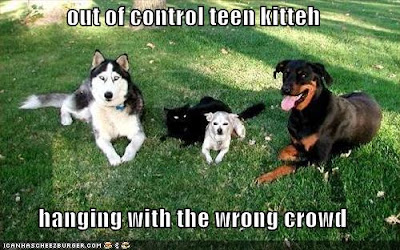
Miles' group of friends is what many parents would consider "the wrong crowd."


But for Miles, it's the right crowd, because although they introduce him to "booze and mischief" as well as smoking and sex, all of which contribute to the constant threat of expulsion dangling over their heads, they understand him. They look at him, and they see Miles, who he really is, and they accept him. This matters so much more to him than whether the people who include him are "good kids" or "bad kids."

The sun around which the rest of the group revolves is Alaska, a girl with so much charisma that everyone seems to be at least a little bit in love with her. Alaska is impulsive and reckless, as well as troubled, and she barely shares the source of those troubles with her closest friends. In the end, knowing Alaska is the greatest source of pain Miles has encountered in his life, but it's also a catalyst for his personal growth, for him to start forming his own values and viewpoints and interests, beyond the main interest he arrived at the school with: last words of famous people.

I really can not recommend this book strongly enough. I've found a new favorite writer.

Here's a videoletter to his brother that Green made when Looking for Alaska was being challenged. It is the best censorship rant ever.


"The books that the world calls immoral are the books that show the world its own shame." Oscar Wilde