Monday, July 14, 2008

On disturbing the peace


The Papercuts blog takes a look at Breach of Peace: Portraits of the 1961 Mississippi Freedom Riders, by Eric Etheridge:

In an introduction to the book, Roger Wilkins, a Pulitzer Prize-winning journalist and professor of history at George Mason University, explains:

Their original protest involved riding vulnerable buses through some of the toughest territory in America at that time: Birmingham and rural Alabama, on to Jackson, then to Louisiana. As some Northern witnesses asked themselves whether these people had lost their minds, the Freedom Riders were waylaid at Anniston and their bus set on fire with them still inside (they escaped by a miracle). They were beaten in Birmingham. They kept on: through the dreaded landscape of rural Mississippi where mass arrests and the horrifying specter of Parchman, the Mississippi State Penitentiary, awaited them. Some were beaten bloody or had bones broken and skulls cracked.

The heart of “Breach of Peace” is the portraits — mug shots taken immediately after the riders’ arrests and the more recent photographs by Etheridge — and their accompanying text. The mug shots show people at the dawn of adulthood (many of the riders were students then); the faces convey defiance and weariness, but also hope and freshness. And though some of the expressions are glum, many exhibit a wry amusement, as if to say, “Yeah, you’ve got me now, but just watch what I do next.”


As always, I'm dazzled by what a few people can do to change the world.

[Post pic of freedom riders after being arrested in Jackson, Mississippi, June 2, 1961.]

Friday, July 11, 2008

What Have You Seen?

So have you seen Iron Man yet? Really good, right? The idea of the super-hero comes from lots of different places. Mythology is a big one, but the hero is as old as history itself and as a concept winds its way through every era and culture. The knight in shining armor, Iron Man’s pretty clear ancestor, is a classic example with their chivalric code and skill in battle. So cross knights with super-heroes, throw some robot in for good measure and you’ve got Tales of Colossus by Mark Andrews, who was one of the creators of The Incredibles. Now if you missed that, don’t even tell me. If you saw it, though, you know anything that one of its creators put out is going to mix powerful emotion, high stakes and amazing action. That’s what you’ve got here. A knight named Orlant dies defending his liege, but his soul is used to animate a giant metal automaton, packed with medieval weaponry and intended for use as a weapon of total devastation. But Orlant’s will is too strong and he escapes a life devoted to destruction and secludes himself in a cave where he intends to rust away the years. Wouldn’t you know Sir Grimon, a power-mad knight who has left the path of chivalry far behind, shows up. He’s got an unbelievably powerful magic sword called Al Rhazear with him and he’s going to use it to threaten the local dragon into his service, snatch the Princess’s hand in marriage and make sure her dad the King doesn’t last too much longer so that the throne is free for Grimon himself.

The massive battle between robot and dragon and the spectacular sword fight between Orlant and Grimon are just two of the action highlights that move so fast and fluidly that you'll feel like you're watching an animated movie. At the same time, what’s going to keep you reading to the end in one sitting is finding out whether or not a good man can keep a hold of himself when he has become a massive and deadly weapon.

Now Rod Serling was also a guy who thought about identity, about good people trapped in bad places and even, sometimes, about robots. Serling created the old television show called The Twilight Zone. Now if you haven’t seen any of those, just stop reading right now and go find some. Maybe, just maybe, the greatest tv show of all time (I told you last month I liked things besides super-heroes, didn’t I?), a trip into the Twilight Zone was a chance to find the unexpected, face your fears and to always run into something very weird.

Some of Serling’s original scripts have been adapted into graphic novels (by Mark Kneece) and the first few are going to be released in September. One of them, Walking Distance, is a prime example of what made the show tick. Martin Sloan lives the high pressure life of an ad executive. Yearning for a taste of a simpler life, he returns to the town he grew up in, a place he hasn’t seen in years, to find the town miraculously unchanged. So unchanged, in fact, that he runs into himself as a ten-year-old boy. What would you do if you had a chance to change your past and, thus, your present? Should you even try? As with the show it’s based on, the graphic novel is a weird adventure with a difficult question at its heart, again about a man trying to find himself.

I surprised myself here by going with two graphic novels that weren’t really about super-heroes. Maybe next time I’ll try to hit a straight-forward super-hero. Maybe Batman, since Dark Knight’s about to hit the theaters. You are going to see that, right?

Thursday, July 10, 2008

A Book for the Tree Huggers


I have mixed feelings about Earth Matters: An Encyclopedia of Ecology. Consultant editor David de Rothschild compiled a lot of good information with plenty of beautiful illustrations, but the book also contains factual errors.

In the introduction, we read the current scientific explanation of our planet's development -- life flourished, creating the biosphere, which consists of various biomes (polar regions, temperate forests, deserts, grasslands, tropical forests, mountains, freshwater, and oceans). Readers learn about each one's climate, natural history, and ecology. Threats from human activity are discussed, and the final part of each biome presented is "Making a Difference," a two-page spread showing us how to reduce, reuse, recycle, and otherwise protect the diversity of life.

Full disclosure: I have hugged trees, and will do so again. I sniff newts and mushrooms, and I love snakes, spiders, and insects. I want tigers, polar bears, rhinos, gorillas, and sea turtles around for countless generations. If global warming is the problem many scientists think it is, then we need reliable information. I continue looking at the evidence, which is pretty convincing, that human-produced greenhouse gases are contributing to this warming.

So I was disappointed by some factual errors in Earth Matters: 1) The sun is not 865,000 million miles in diameter (p. 14); 2) heights of mountains reported on page 169 are apparently off by a factor of ten; and 3) "The result (of the Big Bang) was the birth of a billion stars..." (p. 11) In fact, there are an estimated 100 billion galaxies in the observable universe, and our Milky Way galaxy alone contains perhaps 200 billion stars, maybe 400 billion.*

Twenty years ago, James Hansen, a NASA climatologist, reported to Congress about global warming. Dr. Hansen testified there again this year that, "Now, as then, frank assessment of scientific data yields conclusions that are shocking... I can assert that these conclusions have a certainty exceeding ninety-nine percent." He warned that there would be no practical way to prevent disastrous climate change unless greenhouse gas emissions are curbed quickly.

Long-time activist Scott Nearing told interviewer Studs Terkel, in American Dreams: Lost & Found, "The job is to keep your head above water and to do your share in making the dying society as tolerable as possible." With timely information, maybe the society won't die, after all.

* DK is aware of the errors - one was a typo (the sun's diameter), one was missed by copy editors (the mountain elevations) and one was kind of a miscommunication - "They were using 'a billion' in a sort of loose, unscientific way here to mean 'a lot.' It will be changed to 'billions' for reprints." All are slated to be corrected in future editions and we understand how stuff like this happens. Please don't let it diminish the overall impressive nature of the book, or its significance as an eco-title. - Colleen Mondor
.

Who do you think is overrated?

Over at Papercuts there was a recent discussion of the most overrated and underrated baseball players. The post was sparked by a recent Sports Illustrated list (in which Derek Jeter figured prominently and not in a good way). Jeter is also a big part of book on this very same subject that came out last year. From the Papercuts post:

If it makes Jeter and his minions feel better, he came in second to A-Rod the previous week, when the question was “Whom would you pick to build a team around?” Also, in a book published last year, “The Stark Truth: The Most Overrated and Underrated Players in Baseball History,” Jayson Stark of ESPN calls Jeter the second most underrated shortstop of all time, after Barry Larkin. (Phil Rizzuto, he says, is the most overrated.) We hear the usual blather about how “there are elements of greatness which numbers can’t quantify.” Unfortunately for Jeter - who has obviously been a wonderful postseason player - more things are measured statistically these days, even fielding range. The Baseball Prospectus 2008 sounds a warning: “For years, Jeter’s offense has made him a net positive at shortstop despite his defense. The second half of 2007, taken together with his age, suggests that the day of reckoning has finally arrived.” Only a raging Yankees fan (or someone who lives outside the New York area, as Stark does) could think that Derek Jeter is underrated.


My vote for overrated is Pete Rose, but then again, I'm with Bartlett Giamatti all the way on that subject.

Wednesday, July 9, 2008

Coolest jobs ever

I want to be a futurist.

Or maybe a lunar home designer.

Meaty Little Tidbits of American History 1001

I'm a particular fan of American history in that I'm particular about the parts I like. It isn't an ideological divide as much as it is that there are certain periods that appeal to me for some reason. I'm fond of the colonialists and the American Revolution, but for the stories of the smaller moments and not the battles. I also have a soft spot for the socialist movement of the 1930's and anything that sheds light on the deceptive prosperity of post-war American in the 1950's and 60's. In a lot of cases, the history I'm attracted to are the stories of people who left a lasting impression.

I'll be frank: what originally drew me to these books by Alan Axelrod -- 1001 People Who Made America and 1001 Events That Made America -- was the subtitle on 1001 Events -- "A Patriot's Handbook." Indeed! 1001 events to serve as a handbook for patriots? Now I'm curious.

1001 Events proved to be exactly the book I expected, a collection of short paragraphs that chronicle the history of the country from the original Asian migration 40,000 years ago to Hurricane Katrina. Though presented chronologically, Axelrod suggests (and I agree) that the book should be perused for areas of preference. Using the index in the back one could look up a topic of interest -- like Manifest Destiny -- and read a quick summary to sate one's curiosity before glancing at the entries to either side for a little historical context. In this instance there is a paragraph immediately preceding about the New York Knickerbocker Baseball Club formalizing the rules for baseball, disputed by the suggestion that the game had been invented in Philadelphia 12 years earlier. The entry following manifest Destiny informs us that Texas was admitted into the Union, "vitually ensuring a war with Mexico." Why is that? Well, you'll have to read back a few pages to find out what's been going on in that part of the country.

That, for me, is the joy of this sort of collection, being able to jump around at will. The actual content is fairly safe -- no mention of the Chinese perhaps discovering America, but also no mention of when the Russians first occupied Alaska -- and the brevity of the information given ensures that the curious will need to seek detailed information elsewhere. I was surprised to see that a certain Volney Palmer of Philadelphia becomes the first ad agent and coins the term "advertising agency" in 1841. Not very long after that we get our first "modern" presidential campaigns full of slogans, songs, and negative attack ads. God Bless America!

Which leads me to Axelrod's other book, which in some ways s more satisfying. It would seem a daunting task to believe that the number of people it took to "make" American can be reduced to 1001, but this alphabetical listing of noted Americans does a fine job.

In addition to the usual suspects -- the presidents, the rich and famous -- are the names of those readers might know but never considered the person behind the name. The Armour behind the meat packing business, the Colt behind the gun, the Henry McCarty who was Billy the Kid. I'm pleased to see a fair number of players in the Watergate saga are here: Woodward and Bernstein, of course, but Haldeman, Ehrlichman, Hunt, Dean, and Sam Ervin all make an appearance. The last time I saw a high school history textbook the Watergate scandal was given cursory coverage, and certainly less than what there is here. Usually we get that Nixon was involved in a break-in and cover-up and that's about it. These entries won't fill in all the 18-minute gaps but it's a start.

Artists, musicians and writers are also represented (though not as well represented as I'd like) as are some whose distinction in "making" this country can be seen as dubious. The Reverend Jim Jones and the cuddly Charles Manson are here, but so is Monica Lewinsky. That these people had an effect on events in our nation cannot be ignored, but to say their actions "made" this country what it is strikes me as a bit much. This is where the limitation of 1001 entries is perhaps the book's weakness. I find myself wishing there were more artists mentioned, more women... but to the exclusion of whom?

I suppose questions like that cannot be helped. Recently I was asked to name my top three films of all times and found myself stumbling. For every title I could come up with there were easily three more that sprang to mind, and suddenly I was trying to find some way to winnow down a couple dozen into just three. I suspect it's no less difficult narrowing a list of noted Americans down to 1001 as well.

I found little in 1001 Events to support the claim toward being a patriot's handbook -- unless the implication is that it contains all the information one might need to know to pass a citizenship exam -- and noticed that in the paperback edition National Geographic has left the subtitle off the cover. It's easy to tout patriotism and another to define it. Leave the fuzzy work to politicians and give me raw bits of history to gnaw on instead.

Two tales of werewolves and more

The new issue of Bookslut is up with my new YA column and it includes several books from "hidden worlds" including two werewolf tales that I think discerning readers really must take a look at. First is Martin Millar's Lonely Werewolf Girl of which I say in part:

"With Lonely Werewolf Girl author Martin Millar has written a breakout novel that defies any and all fantasy stereotypes. The best way I can describe it as a combination political thriller and werewolf soap opera -- if your idea of soap opera includes some seriously bloody confrontations between creatures that can rip your arms off. There is a ton of family drama, some deviations into the formation of a successful pop music career, discussion of high fashion (and theft of same), a lot of pizza, and much admiration for Joan Jett and Sabrina the Teenage Witch -- and assassins of all shapes and sizes who kill on a whim and like it. Basically, this book is a delicious 550-page romp through urban fantasy versions of London and the Scottish countryside that draws you in from the first few pages and does not let you go."


Let me stress the bloody part - this is one "werewolves are generally not your friends" type story. Fabulous.

And also our own Kristopher Reisz has a new book out, Unleashed. Some of my thoughts:

"The novel’s plot follows Daniel, who is a popular well-rounded success, becoming attracted to Misty, and the ambivalent way in which she and her “pack” glide through school. Daniel is on the fast track to success with an acceptance to Cornell but he feels like a fraud. With her palpable feelings of anger and clear disdain for the adults around her, Misty seems capable of emotions that Daniel can barely acknowledge. In a word, he thinks she is wicked cool and is drawn to her, and away from everything that that used to matter so much. The shapeshifting that Misty and the others are capable of is the dark secret and how Daniel will react to that, and what will become of his burgeoning relationship with Misty, raises the tension in incremental notches as the story unfolds."


Bad things can happen when you cavort around the city like a werewolf...really bad things.

Two good books, not your usual phone-it-in scary dreck. Give them a shot if your looking to walk on the dark side while hanging out by the pool.

Tuesday, July 8, 2008

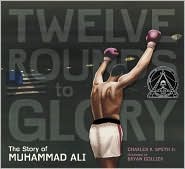
Twelve Rounds to Glory: The Story of Muhammad Ali

Love sports? Love biography? Love poetry? If any one of these is true, then have I got the book for you.

When I was a kid, boxing was in one of its golden ages. Reigning champs were Joe Frazier, George Foreman and Muhammad Ali. I watched Ali fight on TV, and talk smack on TV, and make political points on TV. And he wasn't just on TV - he was talked about on the radio, too. Back then all the good music was on AM radio, and before channels that are now all-news, all-talk all the time took over the AM airwaves, that's where the best pop music could be found. Including Johnny Wakelin's "Black Superman", to which you can listen for free at this link. (You can also hear his song "In Zaire", also about Ali and Foreman's "Rumble in the Jungle".) But it was "Black Superman" that I used to wander around singing:

Muhammad, Muhammad Ali
He floats like a butterfly and stings like a bee
Muhammad, the black superman
Who calls to the other guy I'm Ali catch me if you can


What does this have to do with poetry? Well, first, I should note that during his smack-talking days, Ali was quite the slam poet. "Float like a butterfly, sting like a bee, your hands can't hit what your eyes can't see" is just one example. Many more can be found in his press conference appearances pre- and post-fights.

But the reason I'm talking about Ali is because at the very end of last year, Candlewick Press put out a wonderful book by Charles R. Smith Jr. called Twelve Rounds to Glory: The Story of Muhammad Ali, illustrated by Bryan Collier. This book is a biography of Ali, told in Ali-like verse that is separated into twelve chapters.

Each chapter is a poem that describes part of Ali's life - his birth in the segregated south into a family in which his ancestors had been slaves; his childhood and development as a boxer; his early boxing career and his Olympic achievement in Rome; the development of his brash public persona; his boxing bout with Sonny Liston that earned him his first heavyweight championship; his decision to embrace Islam, ditch his birth name, Cassius Clay, because it was rooted in slavery in favor of the name "Muhammad Ali", and his position as a conscientious objector during the Vietnam war; the career ramifications of his decision to refuse to fight in the war; his loss in the fight with Frazier in Georgia (where he could fight because there was no boxing commission, including Ali's derision of Frazier as an "Uncle Tom") and subsequent fights setting up his challenge to reclaim the heavyweight championship; the "Rumble in the Jungle" - a title fight against reigning champ George Foreman in Zaire ("Ali! Boo-ma-YAY!"); his rematch against Smokin' Joe Frazier and the ferocity of that particular match; a loss by decision to Leon Spinks, making Spinks the new heavyweight champion, followed by a decision to retire; the post-retirement bouts in order to earn a few paychecks, and the reasons for the need for money explained; and his out-of-the ring life as a father and, in later years, man with Parkinson's syndrome. The text of the book ends in 1998, with Ali lighting the Olympic torch in Atlanta. The timeline following the text runs through 2005, and his receipt of a Presidential Medal of Freedom, the opening of the Muhammad Ali Center in his hometown of Louisville, Kentucky, and his being awarded the Otto Hahn Peace Medal in Germany.

All of this could be the stuff of legend, but Charles Smith avoids the book becoming a panegyric. He keeps it real by including some of the bad along with the inspiring and the good. Ali was an inspired fighter and an inspirational speaker, but along with his uplifting words on race and the horrors of war, Ali generated some truly ugly taunts when it came to dealing with other fighters. Along with his dedication to the Muslim faith and his search for peace and integrity, Ali's personal relationships were not always terrific, whether it was with women or some of his staff. Smith doesn't go into graphic detail, but enough information is given to present at least the basic facts faithfully, without whitewashing any of it.

And right about now, I'm guessing this is what you're thinking: This biography sounds great, Kelly, but I thought you were going to talk about poetry. Where's the POETRY?

Ask, and you shall receive. And if you'd like to hear it as well as (or instead of) reading it, Charles is only too happy to oblige, and you can access this (and three other poems) as audio files at his website.

ROUND ONE: The Golden Child
"I always felt like God made Muhammad special,
but I don't know why God chose me to carry this child."
—Odessa Clay, Cassius Clay's mother


Bathed in beautiful light
from parental love,
brown skin shimmers
with a glow from above.
In 1942, the seventeenth of January,
you entered the world
in Louisville, Kentucky.
Whites Only stores
and Whites Only parks
sifted you out
because you were dark.
No Negroes Allowed
and No Colored signs
created separate worlds
and drew color lines,
but your middle-class parents
managed to survive
through hard work and faith
and were able to provide
you, their first child,
and your little brother later,
with food, shelter, clothing,
and something much greater:
love
that was passed
to you from day one,
love
that was passed
to you, the new son
of mother Odessa
and father Cassius Clay,
who also passed the torch
of your name
that birth day,
passed down to you
from a white farmer who
inherited a plantation
and your great-grandfather too.
But Clay freed his forthy slaves
during America's dark days,
then fought to end slavery
and fought to change ways
and laws
and thinking
deep in the South,
using newspapers,
knives,
fists,
and his mouth.
He fought with a spirit
that lives in you today,
reflected in your name,
Cassius Marcellus Clay,
reflecting love from your parents,
who had faith and belief
that God would watch over you
and provide inner strength.


Now, in the actual book, this poem appears on one page, split into three columns, with a piece of art by Collier on the facing page showing the infant Ali lying atop a quilt. It is one of the shortest poems in the book, some of which go on for pages with multiple columns per page, which gives you an idea of the commitment that Smith had to getting the information right. The illustrations throughout the book are a combination of watercolor and collage, and they add a tremendous amount of impact to the text.

Now, I feel it incumbent upon me to address a possible question about all these lengthy, skinny-lined rhyming poems about Muhammad Ali. Because when I first got the book and opened it, I thought "Egad - that's a lot of skinny-lined rhyming text. Won't it get old fast?" And I'm wagering that some of you are wondering the same thing, or would be if you were thumbing through the book. And in all seriousness, the answer is yes and no. Yes, it gets a bit old for your eye to see so many skinny columns on the page, so from a book design standpoint, it was rough going. But they broke up the text with illustrations and occasional insertions like REALLY BIG QUOTES, and with page turns, and with art placement in different ways, so it's not so overwhelming.

But the NO is so much more important, because the actual reading of the poems doesn't get old at all. This book comes in at 80 pages, and those skinny columns and punchy rhymes (pun intended) push you along at a pretty good clip. And the word choices are wonderful, particularly in the fight scenes which actually get a bit too graphic for really young readers or squeamish girls in places, but I imagine that boys would read those same passages and call their friends over and read them again, looking at each other with awe and in glee and exclaiming "COOL!"

A sample of what I'm talking about, from "Round Seven: "Who You Callin' Tom?":

Out of nowhere like lightning
came a leaping left hook
filled with Uncle Tom anger
as Frazier's fist shook
your brain in your skull,
snapping your neck back,
when his fist met your jaw
with one mighty CRACK!
sending millions of ants
into your body as the mat
rose up to smack
your beaten brown back.


From later in the same chapter, and a fight with Ken Norton:

Ten fights,
ten wins,
all led up to Ken
Norton, a boxer
and former marine who
posed a big problem
for you in round two
when his rock-solid fist,
released from way back,
slingshot your cheek
and broke your jaw with a CRACK,
pooling your mouth with blood,
marinating your mouthpiece;
you continued to fight
using your ring expertise.


In all those 80 pages there are only a handful of what might be considered forced rhymes or manipulated line breaks, and to be honest, they're still in keeping with the nature of Ali's delivery style, which Smith channels extraordinarily well. Earlier this year, as part of this year's Summer Blog Blast Tour, I posted an interview with Charles Smith, the remarkable poet who has managed to tell Ali's life in Ali-like rhyme, complete with brutal fight scenes, upright integrity, and inspirational triumphs. During that interview, Smith talked about the large amount of research that went into this book as well as his process in selecting what to include and what to omit:

The frustrating thing that turned out to be a blessing in disguise was the fact that a lot of the info on him was scattered in various books; some books focused on just his fights, some focused on his politics, some focused on his battles with particular boxers such as Frazier, so much so that I said, “I wish there was just one book that had everything.” That’s when a light bulb went off and I said, I’ll do that book. To that end, I felt I needed to show him as a man with vulnerability, hubris and dignity that would reflect a whole person not just a caricature. My editor helped in that regard because she didn’t want a sanitized version of his life and when I read somewhere that he wanted people to know his whole story, not just the highlights, that’s when I knew I had to do his wishes justice by showing every part of him.


When it came to creating the poetry, Smith explains his process over at his website. Here's a quote from his site that gives some insight on what he did:

I wanted the book to represent every part of this remarkable man and do it in such a way that hasn’t been done before. Once I had all the facts, double and triple checked, I then had to put it into verse. Each word was chosen with care, which made each line strong, which made each verse strong, which made each chapter strong, which made the book strong. Since it’s about boxing, I wanted it to feel like a boxing match, so to do the fight scenes, I watched old movies of the actual fights and wrote down what I saw, starting with the introductions of each fighter and where it took place.


Most of the images inside the book include people, usually composed in collage format. The only inside spread I could find available on the 'net, however, is the image at the start of the final chapter, which appears not to involve collage, but to be a straight-up watercolor. Feast your eyes on the image that leads off the last chapter, "Round Twelve: Muhammad on the Mountain":


As I said at the start, if you love sports, biography or poetry, this book is for you. And maybe, just maybe, if you pick it up because you love sports, you'll find out that you like biography or poetry just fine. Sports fans are encouraged to try some of Smith's other sports-related books, including several about basketball.

io9 on the Ten Best Batman Books


Wellll, I can't say I agree with all of these - in fact some are really lame. What should be on the list and isn't? How about Gotham by Gaslight, an "Elseworlds" alt-history involving Jack the Ripper, Long Halloween which is a great look at Gotham's crime syndicates and shows Batman at his detective best (very noir for you Raymond Chandler fans)and Batman: Absolution where Batman confronts a terrorist years after she bombed Wayne Enterprises and caused the deaths of many of his employees but claims to have changed. (Not everybody likes this gn but I thought it was pretty good.)

One major fave of mine that was overlooked though is Detective No. 27, another alt history which takes place in the 1920s and involves Bruce Wayne joining a long line of detectives (many of them real historic figures) who solve government conspiracies. Here's a bit of the Fourth Rail review:

For 75 years, a secret society of detectives -- founded by the legendary Allan Pinkerton in the wake of President Abraham Lincoln's assassination -- has fought a quiet war against a group of nihilists known as the Knights of the Golden Circle. Each member of the Secret Society of Detectives is given a number rather than a name. A young man named Bruce Wayne returns home to Gotham City in 1939 after a decade of studying abroad, and he has one goal on his mind: to avenge his parents' murder. His skills and background have attracted the attention of the Society, though, and soon, Wayne finds himself dubbed Detective No. 27.

The best thing this ambitious project has going for it is Peter Snejbjerg's artwork. Those who have sampled his work on Starman, The Books of Magic and JSA knows it boasts a dark edge, one that's in keeping with the conspiracy-theory aspects of this story. He also does an excellent job of capturing not one but two historic periods here. The likenesses of historical figures are strong as well. Snejbjerg brings a gothic quality to the story that puts one in mind of Mike (Hellboy) Mignola's style, and there's an exaggerated, twisted quality in his style that's appropriately unsettling and surreal.


Be sure to read the comments at the io9 piece - lots of opinions on good and bad Batman stories.

Monday, July 7, 2008

What Happened by Peter Johnson


Posted by Alex

I'm supposed to review What Happened by Peter Johnson, and I will,in a sense. There are two ways of looking at this book, and perhaps a lot of the books covered here: the pure literary opinion, and the perspective of our hypothetical, all-purpose teen boy. Sometimes they may converge; in this case, I suspect they're a total dichotomy.

The book, by an award-winning poet, is described as a "prose poem." The nameless sixteen-year-old narrator initially tells us, "if my story seems erratic it's because I think that way," then relates the night he, his brother and two friends run over a man during a snowstorm. The rich kid driving, Duane, wants to pretend it didn't
happen; the narrator and his older brother Kyle are more conflicted. For soap-opera color, Kyle is dating Duane's sister Emily, on whom the narrator also has a crush, and Duane's rich, powerful father once romanced the narrator's late mother.

This is a thin book--"sparse" being the positive spin--and yet it spends most of its time away from its central dilemma. The narrator is on psychiatric meds, although his exact diagnosis seems unknown to him, and he's prone to digression. He's extremely passive, and ultimately the story resolves with no direct input from him; he even sleeps through the moment the other characters make a crucial decision. In fact, the story only tangentially affects him, since it's his older brother who's in actual danger.

As I read this, I tried to imagine a teenage boy's response to it. First there's the cover image of a very feminine young man, eyes closed and wispy blond hair to his shoulders. The first thing I thought of (and this may say more about me than the book) is that What Happened would detail a gay teen's struggle with his sexuality.

As it turns out, this cover (or this interpretation of it) is completely off-base. I wonder how many young men, some of them doubtless struggling with their own sexual identity, would avoid the book simply because of this (or alternatively, read it for that reason and be disappointed).

Then there's the style. Calling something a "prose poem" is pretty daunting if you want teens to read it. I've always thought the term "prose poem" was a bit arch anyway, a way of saying "pretentious" without using the word. And since the story is pretty simple and limited to the narrator's scattershot perspective, the author has
plenty of opportunities to make observations on philosophy, morality and the vagaries of self-knowledge. But will the intended audience of ages 13 and up care to wade through this?

That's where I think the book fails. It may be about teenage boys, it may be aimed at teenage boys, but I can't imagine most teenage boys reading it. It's too slow, it's too diffuse, and ultimately it features characters with whom most boys won't want to identify. For a short, slender book it's a slog at first, and while it does pick up steam toward the end when real conflict occurs, the fact that the conflict happens to other characters and not our dazed narrator robs it of its immediacy.

Interesting in the abstract, thin in the concrete, I think most teenage boys would not be terribly entertained by What Happened.