Friday, September 12, 2008

Extravanganza!


Some comics are like weekly TV dramas, some are like fast-paced action movies, and surely some are like that sitcom that makes it only a week or two before it’s pulled from the schedule forever. But every now and then a comic comes along that’s like a massive summer blockbuster blowout action extravaganza. JLA: The Deluxe Edition (by Morrison and Porter) is that comic book. These stories, from about ten years ago, were writer Grant Morrison’s first foray into mainstream super-hero comics. He’s since become something of a super-star in that arena, but back then had just come from very off-kilter books with a very alternative sensibility like Doom Patrol. So what he did, see, was take this slightly deeper way of looking at familiar situations and marry it to big-scale, heroic story-telling.

So you’ve got your incredible action set-ups: a race of alien beings with powers as vast as Superman come to Earth and appear to have our best interests at heart, but slowly they turn the entire human race first against its heroes and then against itself; a war in heaven, between armies of warrior-angels spills over into Earth; a mastermind captures the League and traps them in a mindscape of their own making and the only one left to take him down is Green Arrow and his dinky little trick arrows. You’ve got all that, but suddenly, characters who seemed like they were cardboard cutouts are guys who you understand. What is it actually like to use a ring that can make anything you think of, but it uses your actual willpower as fuel? How does a mere human like Batman find a way to defeat a room full of enemies at the same power level as Superman? What is it about Superman that makes him the inspiration he is, and what kind of price does it exact? Morrison packs so many fresh ideas and subtle character moments between the action pay-offs that even second-rate characters like Aquaman (ugh!) seem like the sort of guy you’d want by your side if you ever had to take on a shape-shifting monster with super-strength. And if you like it, hang on, because they’ll eventually reprint the rest of Morrison’s JLA run and it just gets better and better.

Meanwhile, there’s William Shakespeare. Don’t know where you stand with old Bill, but chances are you’re okay with Manga. A non-sequitur? No, as it turns out. Manga Shakespeare’s been adapting his plays for a while now with mixed success. Not all of the plays work so well in that format and they’re not all ideal for being updated with futuristic empires and chrome and plastic headgear. Turns out, though, that my favorite of his tragedies does. Julius Caesar (by Mustashrik with a hand from Shakespeare himself) is about an emperor who might be making a play for more power than he should have and the cabal that forms to assassinate him. But they need an inside man and that’s where Emperor Caesar’s right hand man and best friend Brutus comes in. But killing Caesar isn’t the end by a long shot. The fallout leads to all-out war and, since it’s a tragedy, you can pretty much guess what kind of ending you’regoing to get.

The story is intense, but it’s the art by newcomer Mustashrik that really makes this one work in this format. His dark lines create a moody depth and bring out the emotions of guilt and anger in a potent way. The assassination scene, without being horribly graphic, is a particularly powerful and grueling example of the artist’s mastery of this form.

So, as summer ends, maybe you can take advantage of one last summer blockbuster, and as school starts, you can pick up something educational. Hey, I’m here to help.

Thursday, September 11, 2008

The Brimstone Network book giveaway


Anyone who loves action/fantasy stories with good guys, bad guys, cool powers, and kid-heroes will dig Brimstone. In the fight against evil, Elijah Stone was a force of good. He bravely led a group of sorcerers and warriors called The Brimstone Network. After an unexpected attack, the Network is almost all wiped out, and Elijah is among those who have fallen. His son, Bram, inherits the responsibility of leading the Network. Only thirteen years old, this young sorcerer has to quickly learn who to trust and how to channel his true nature as he assembles a new Network and gathers potential members - some of which are just as young and inexperienced as he, but each of which has a special supernatural ability.

The ending of the first book was perfect: it satisfied the first big battle involving Bram and his new ragtag team, and it hinted at things to come. I really liked the book - as if you couldn't already tell! - and cannot wait for the next one. This is the start of a series, with Book Two: The Shroud of A'ranka coming out in December 2008 and Book Three: Specter Rising coming out in January 2009. I'm anxious to see what becomes of the new members of the Network, and I wonder what new and old villains will pop up.

Read the post at my blog about the books and visit the website to learn more about the series.

The contest is now closed. Thanks to everyone who entered!

Nothing Endures but Change


Well there's literature, and then there's Literature. I Ching (The Classic of Change) was one of the first efforts of the human mind to place itself within the universe, over three thousand years ago. Some people consult it as an oracle: Ask it a question, and I Ching's response can be interpreted as commenting on recent events in your life, perhaps coming events, or as commenting on what is happening now. It's all about the yin and the yang, which represent the eternal opposites, like light and dark, firm and soft, male and female, or radiation and gravitation. The Complete I Ching is the best translation I have found (I own four.), emphasizing the unity of Heaven and humanity and the Tao of Change.


I would like to quote some other reviewers of this Chinese classic. Stewart Brand describes the book as "a brilliant problem-solving device. A problem (or ignorance) generally consists of being caught in local cyclic thinking. To consult the oracle, the wisdom of chance (or synchronicity, no matter), is to step out of the cycle of no-change and address a specific story on the nature of change. You now have an alternative set of solutions that owe nothing but proximity to your problem. You make the associations, you find the way out. It's prayer... I can't think of a more important and useful book than this one. It's famously ancient, poetic, deep, esoteric, simple, involving. It has been the most influential book on American art and artists in the last 15 years." (Brand published this review of an earlier translation in The Last Whole Earth Catalog in 1971.)

Reviewing The I Ching Workbook, Howard Rheingold wrote (in The Millenium Whole Earth Catalog, 1994), "The nature of the oracle within this ancient Chinese book of mental maps is both a personal and a disembodied one; when you use the I Ching for a while, you begin to notice the focuses and blind spots of your own reality filters. And you begin to develop a relationship with the entity that seems to emerge from the pattern of images and poems the book reveals in response to your questions. Whether or not you are a believer in the oracular powers of this process, or whether it is a good guide for art or love or business, as many claim, it is easy to understand that relationship one has with the oracle.

And Carl Jung was also a fan: "The I Ching does not offer itself with proofs and results; it does not vaunt itself, nor is it easy to approach. Like a part of nature, it waits until it is discovered. It offers neither facts nor power, but for lovers of self-knowledge, of wisdom -- if there be such -- it seems to be the right book." (In Jung's foreword to the Wilhelm translation, 1949.)

This profound and beautiful book rewards extended study. When I recently read John Briggs' Seven Life Lessons of Chaos: Timeless Wisdom from the Science of Change, the parallels with the I Ching were remarkable. I enjoy connections like that. Maybe you will, too.

Wednesday, September 10, 2008

King Arthur, Lout.


It's said history is written by the winners, but who writes the legends?

The Legend of King Arthur is one that weaves fact and folklore into an irresistible tale of medieval knights, battles and romances, intrigue and mysticism. As legends go Arthur's is as mailable as they come. Defender of Britons against the Saxons, crusader for the Holy Grail, the Arthur of legend is of a man who speaks both to and for a Christian God while receiving gifts from Pagen mistresses in lakes.

Playing against the backdrop of familiarity, Philip Reeve's Here Lies Arthur takes the legend of Arthur, son of Uther Pendragon, and presents him as he might have been: a boorish, petty warrior with a thirst for conquest and the gift of a good Public Relations man.

Arthur, nicknamed the Bear, and his band of knights roam the countryside like Medieval Mafia offering protection from the Saxons in exchange for tribute. Those who remain loyal to others find their villages laid to waste. To ensure a smoother, more peaceful transition (and to avoid fighting wherever possible) Arthur has his storytelling friend Myrddin arrive in advance telling tales and spinning yarns about the man who will unify them once and for all. There is magic woven into this spin doctoring, a cheap magic designed to fool the superstitious, and Myrddin has dedicated his final years toward convincing one and all that Arthur is the leader they need in these troubled times.

Ah, but the thing here is who is telling the story of the creation of the legend.


When Here Lies Arthur opens we are in the midst of a raid on a small village. In the chaos a young girl named Gwynna escapes by slipping into the river and swimming downstream. When found by Myrddin, this girl with her ability to hold her breath underwater provides him with the opportunity to help the Bear unify a local band of knights behind him. After that, Myrddin decides to take Gwynna as his servant but must pass her off as a boy in order to keep her close by. It's Gwynna - now the boy Gwyn - who tells the story of Arthur as she knew him, from the height of his limited empire, through his days with Gwenhwyfar and a preposterously creaky round table, to his last sad, almost pathetic moments. It's a great adventure, full of battles and questionable alliances, and it lays down a nice little spin on the idea that great legends often mask the ugly truths behind those tales. In this case the clue is in the title's verb.

It's an interesting take on the power behind the throne. Myrrdin has but all his eggs in one basket and is willing to overlook Arthur's weaknesses because he feels that his importance as a polarizing figure are more important. Sometimes it's difficult not to see the parallels with modern politics where, say, a presidential advisor might be the one secretly behind the scenes pulling strings and diverting public attention. As Reeve has Gwynna/Gwyn slip in and out of various circles on influence we see the legend as it might have been, from the eyes of dull villagers trying to survive, through the adreneline charged eyes of the knights, to the cloistered whispering of the ladies of the house.

A few words of caution here. Yes, I realize this story is told from the perspective of a girl, but anyone who ditches this book because of the fact is doing themselves a great disservice. Gwynna is a tough, resourceful narrator who discovers she is much happier being one of the boys (especially later when Myrddin has her become a girl again in order to keep eye on Gwenhwyfar for him). She's a keen and wary observer, full of mischief, and a a growing sense of consciousness that allows her to question what she sees as clearly wrong.

It's easy to want to go looking for connections with previous tales, to match the Old English names with the ones we know today. Reeve plays with all the elements anew, almost deliberately seeming to debunk as much as he can, so for those who find the legend of Arthur sacrosanct you may wish to take a pass at this. You'd be missing out on a great yarn, but you'd wind up arguing with the book's recombined narrative.


Also, don't go looking for this book with the awesome UK cover (top) because Scholastic decided to wimp out and go with something a little more fantasy looking. I can understand not wanting the face of a boyishly handsome Arthur on the cover of a book narrated by a girl, but did Scholastic have to go with the dull electric sword (middle)? Couldn't they at least have been bolder and gone with the German cover(bottom)? Hmm, maybe that German cover wouldn't work either.

Normally I like to wait until a book is out before reviewing it, but this one has me busting at the seams. I'm sure advance copies are floating around already, but otherwise keep an eye peeled around the end of October.

Here Lies Arthur
by Philip Reeve
Scholastic Press

Tuesday, September 9, 2008

Beowulf and Sir Gawain

Today, I'm talking about two texts that I've seen listed as "summer reading" at a number of high schools in my area. And if they are required around here, I figure they might be required elsewhere as well.

N.B.: THIS POST WILL NOT ACTUALLY COMPLETE YOUR HOMEWORK/BOOK REPORT FOR YOU. NOR WILL THE PERSON WHO POSTED IT.

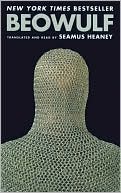
The specific version of Beowulf I'm talking about today is the translation from the Old English done by noted poet, Seamus Heaney. The book comes in two versions: the one pictured there to the left, and an illustrated edition with a photograph of a dagger on the front cover. The version to the left contains the Old English on the left-hand pages and the modern English translation on the right. It's the recommended version of the text for most schools because, I assume, there are still some teachers out there who like to torture kids with the Old English, at least a bit, as my teacher did when I was in high school an aeon ago. I should add that I think it's cool to understand that our modern language evolved from something else, and to note the similarity to, say, German or Norse languages. But as most teens don't learn German or Norse languages, and most teachers can't read Old English, really, I think this is something that might better be left to, say, college linguistics classes.

Does that mean we shouldn't all read Beowulf? Not at all. Beowulf is an extremely old story that is still interesting and relevant, and a way of looking at the ancient history of the Anglo-Saxons. But better than that, Beowulf the character is, in essence, the prototype of what we now call a "superhero." Not only was he a hero, in the same way that Hercules or Achilles had been, but he was almost superhuman in his strength and courage. Despite having been mocked in his homeland, he remained calm and kind, proving others wrong through his actions, not through his words. Interestingly, in this long (and sometimes convoluted) epic poem, which is a demonstration of effective use of words, the take-home message is that it is deeds, not words, that really matter.

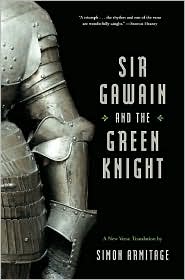
Behind the cut, I'll be talking more about Beowulf, and about two different graphic novel versions of the story and how they stack up to the Heaney text, and I'll be talking about the book to the right: Sir Gawain and the Green Knight: A New Verse Translation.


More about Beowulf:

One of the things that is helpful about the Heaney text is the use of small notes in the far right margin that give readers signposts. Those notes kind of sum up what's going on and keep you grounded with where you are in the story. Reading the notes won't actually tell you the whole story (not by a long shot), and they completely bypass the really cool stuff, like the deadly wrestling match between Beowulf and Grendel, or the wrestling match turned knife fight with Grendel's mother, or the final showdown with the dragon.

One of the things that Heaney does in his translation is that he uses some of the principals of Anglo-Saxon poetry. Anglo-Saxons used poetic lines that basically split in half in the middle, and each half of the line contains two stressed syllables. Anglo-Saxons also used a lot of alliteration, or repetition of sounds (and, in particular, of the sounds starting words in the line. Here's an example of what I'm talking about, from lines 442-445:

If Grendel wins, it will be a gruesome day;
he will glut himself on the Geats in the war-hall,
swoop without fear on that flower of manhood


Stressed syllables are underlined; alliteration within a line is bolded.

Beowulf, adapted and illustrated by Gareth Hinds, will provide you with the full plot of Beowulf, albeit without using a whole lot of words. When you consider that the original book has 3182 lines of text, this is not to be wondered at. Hinds manages the text by adding boxes full of narration here and there throughout the book, but relying mainly on his illustrations. My favorite parts of Seamus Heaney's Beowulf are the descriptions of the battles (the "action scenes" if you will). But in Hinds's version, all of the action scenes are, well, just that: no text, all illustrated. It's interesting to see it visually, but if you rely on this particular graphic novel as a shortcut for the text, you'll miss out.

Beowulf, story by Stefan Petrucha, illustrations by Kody Chamberlain. This version of the text couples shorter bits of text with illustrations throughout, including during the action scenes. It does not, of course, take the place of reading the Heaney translation, and the words are not as beautifully rendered, but something closer to the full story can be discovered in reading this particular graphic novel (not that any reader should rely only on the graphic novel, of course!)


Sir Gawain and the Green Knight, translated by Simon Armitage, is a great deal of fun, and an altogether faster read than Beowulf (as in, I read Beowulf in pieces over a matter of days, and I was able to read Sir Gawain in a single sitting in a matter of hours.

Sir Gawain and the Green Knight was originally written in Middle English sometime in the 14th century, most likely by someone from Northern England (according to the introduction). But it shares some of the hallmarks of Anglo Saxon poetry that we discussed before: lines which have at least an internal break with two stressed syllables per half-line and plenty of alliteration. In addition, this poem features occasional inset lines (really, half lines split apart), in order to emphasize the fact that the inset lines contain rhyme. As in Beowulf, the left-hand pages contain the Middle English, and the right-hand pages contain the translation. Here are lines 580-589:

Then comes the suit of shimmering steel rings
encasing his body and his costly clothes:
well burnished braces to both of his arms,
good elbow guards and glinting metal glove,
all the trimmings and trappings of a knight tricked out
      to ride:
  a metal suit that shone;
  gold spurs which gleam with pride;
  a keen sword swinging from
  the silk belt to his side.


Another similarity to Beowulf, which may not be accidental, is the struggle between a good knight and an otherworldly being, the Green Knight, whose head Gawain chops off with an axe on first meeting, but who picks up his head and tells Gawain to meet him for a final challenge in a year's time. The story is full of Medieval imagery and folklore images that include Germanic and Celtic traditions (including references to the Green Man and more). Armitage's translation is easy to get through. As Heaney did for Beowulf, he tries to maintain the rhythms of the original, but he doesn't always translate 100% faithfully, in part because he felt that preserving the poem as a poem was more important than getting it all the way right.

Those of you reading Beowulf can be envious that you didn't get the slightly easier text to read. Those of you reading Sir Gawain can envy the Beowulf crowd their access to good graphic novel versions to help them along. Poetry fans will enjoy the rocking rhythm of Anglo Saxon poetry, and may be inspired to write some verse using its devices. I know I'm going to give it a whirl.

Monday, September 8, 2008

Weird Science


One off letter of genetic code that causes people with this rare condition to cannibalize themselves--how do they survive? Two Russian brothers who consider themselves to be one mathematician with two bodies. One of the men behind the race to crack the code of the human genome, his motivations and obsessions. Panic in Level 4: Cannibals, Killer Viruses, and Other Journeys to the Edge of Science by Richard Preston is advertised as science writing, but it is also fundamentally about people.

Preston's introduction to this collection of short pieces (all previously published in The New Yorker magazine, but updated & loosely connected for this book) gives some insight into his process when approaching a new topic. He is a journalist, but considers his writing creative/narrative nonfiction, and the people he writes about his characters, not his subjects. Preston writes about immersing himself in the worlds of his characters in order to get a better understanding of their lives, their work, and their humanity--not only through extensive interviews and detailed notes, but by trying to experience what they experience as much as he can. He doesn't just ask what its like to go into a lab wearing a pressurized suit and face one of the world's deadliest viruses--he does it. He climbs into the canopies of some of the tallest forests in the United States. He tries to paint a well-rounded picture of his characters--not just the basic facts, but the feelings behind the facts (what DOES it feel like when your suit rips in a level 4 hot lab?). He is also writing about some very intriguing bits of science. Preston's approach may be something you want to consider if you aspire to write engaging nonfiction.


The pieces in this book can be read separately, though Preston does connect them. While self-cannibalism and the search for the host of the Ebola virus may sound more exciting than a homemade computer calculating pi to billions of digits or what's killing hemlock trees off by the thousands (depending on who you are and what you consider exciting), all of the pieces feature interesting people and fascinating science. If you enjoy the Ebola or tree pieces in particular, you might want to check out Preston's other books. His "dark biology" trilogy includes the nonfiction works The Hot Zone and Demon in the Freezer, as well as the novel The Cobra Event. All three books deal with deadly viruses and threats of bioterrorism. The Wild Trees: A Story of Passion and Daring focuses on the alien world of California Redwoods. Preston's web site includes a "climbing wild trees" photo gallery, as well as listings of all of his New Yorker articles (check with your local library to see if they're avaialbe in a full-text database). Real science is often stranger than fiction, and Preston shows here that the people behind that science can be as interesting as the science itself.

Sunday, September 7, 2008

The ultimate animal encyclopedia

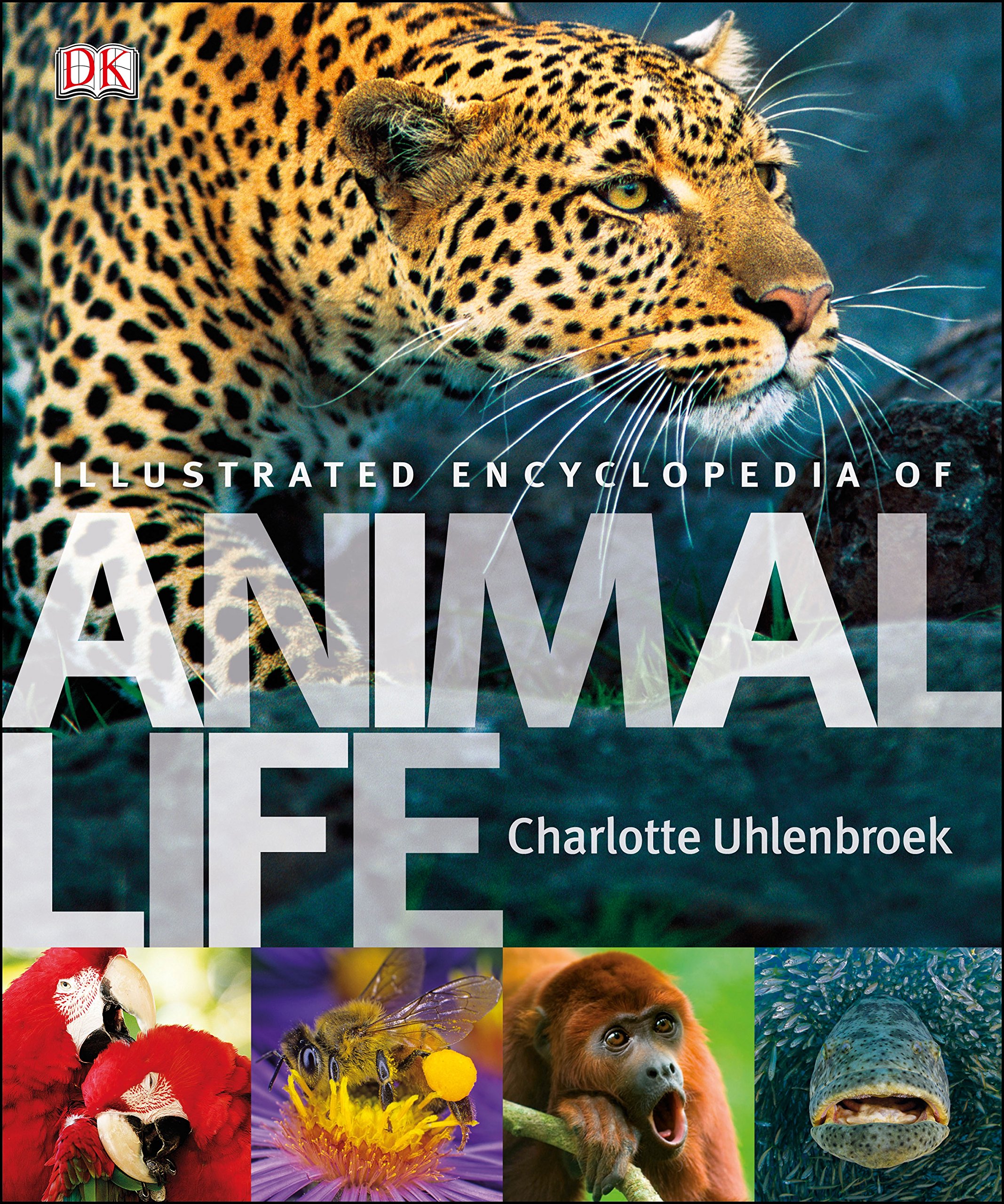
Every now and again a nonfiction book comes my way that is an absolute stunner. Editor Charlotte Uhlenbroek's Animal Life, which was "authenticated by the American Museum of Natural History" is the kind of coffee table/door stop/comprehensive collection that any curious kid or adult will go nuts over. It's from DK so can imagine how impressive the full color photographs and illustrations are (and there are thousands of them). But it's the unique way that the information on the animals is presented that really knocked my socks off. You have sections on all matter of anatomy, a look at how different animals move (from leaping to running, sections on vibration and echolocation, a comprehensive look at habitats ("living space"), migration, hunting, and on and on and on. From lions to praying mantis, the coverage of all manner of mammals and insects, fish and birds is awesome.

You just could not ask for a better single resource on animals and honestly, if you have a ton of animal books already (like I do) then this is just the icing on the cake. It has a steep price ($50) but consider it a life purchase. You will have this book and reference it for decades, I guarantee it.

For the new environmentally conscious 21st century, books like Animal Life are touchstones in how we live with the other creatures on the planet. There's no more pretending that we are the only ones who matter - might as well learn as much as we can about everyone else and this is the best way to start.

Friday, September 5, 2008

Venomous -- Christopher Krovatin

When Locke Vinetti gets angry, bad things happen. When the venom takes over, he feels fantastic and all-powerful:
It welled up inside me, like tears well up in your eyes--only this thing was pure, liquid hate, anger and rage and depression, all in a physical manifestation. This was no simple emotional response; this was a real, honest-to-God, all-over change. It percolated up in my head, bubbling, bubbling, and then bursting, overflowing. I felt it burning in my veins; every part of my body was so alive, more alive than I'd ever felt it before. And once the feeling, the substantive emotion, had filled me and solidified, it took control. But the worst part about it was that I enjoyed it--Fuck, I loved it.*

...but once it is gone he is left shaken, weak, ashamed and often in tears. Now, over ten years since it first manifested itself, Locke has realized that he needs to get rid of the venom once and for all -- both because of the effect it has on his family and his friends and because he's getting the feeling that the venom is ready to take over permanently.


Each chapter is followed by a full page black-and-white comic-style illustration by Kelly Yates paired with an installment about Blacklight, Locke's imaginary superhero alter-ego. Those passages parallel locke's real-life story, are pulp fiction to the max, deliberately over-the-top (I assume) and great fun. Venomous is by turns fast-paced, slow-paced, violent, tender, frightening, funny, joyful, sexy and angsty. It is always gritty.

I read Christopher Krovatin's first book, Heavy Metal and You, back when it came out in 2005**. I hands-down adored it in every way. Venomous, I had a harder time with. I identified much more with Randall, Locke's best friend, much more than with Locke -- as this book is a first-person narrative, I found myself extremely frustrated with Locke on an almost-constant basis. Like Randall, I just didn't get the venom. I'm still not sure if that was my problem or the book's problem.

The book, and even more so, Locke himself, reminded me very strongly of another angry book and another very angry character -- it's a problematic comparison because of the associations so many people have, but I'm going to go for it anyway: Locke Vinetti and his journey reminded me very much of James Frey's character and his journey in A Million Little Pieces. Do with that what you will.

*This text was taken from an advance copy of the book.

**When the author was a junior in college!

Cross-posted at Bookshelves of Doom

Thursday, September 4, 2008

Book Review- Nation by Terry Pratchett


Nation by Terry Pratchett will be released on Sept. 30, 2008 from HarperTeen Books.

The sea has taken everything. Mau is the only one left after a giant wave sweeps his island village away. But when much is taken, something is returned, and somewhere in the jungle Daphne—a girl from the other side of the globe—is the sole survivor of a ship destroyed by the same wave. Together the two confront the aftermath of catastrophe. Drawn by the smoke of Mau and Daphne's sheltering fire, other refugees slowly arrive: children without parents, mothers without babies, husbands without wives—all of them hungry and all of them frightened. As Mau and Daphne struggle to keep the small band safe and fed, they defy ancestral spirits, challenge death himself, and uncover a long-hidden secret that literally turns the world upside down. . .

In this newest YA novel from admired fantasy author Terry Pratchett, he steps out of his usual setting of Discworld and writes a story that takes place in our own world, though sometime in the mid-1800s, from what I can gather through my reading of it. But like other Pratchett novels, it is written in third person omniscient and goes between several characters, though mostly through Mau and Daphne. Although this may seem like a simple re-telling of the flood story in a more recent time period, it is a lot more than that- this book questions beliefs, class and ethnic differences, and many more. Pratchett knows how to make his readers think while reading his novels, and does a great job at it. Hopefully, that hasn't scared people off yet because along with the thinking and the questioning, there's also the humor. Pratchett's novels are filled with humor, though not usually the slapstick kind (of course, an occasional slapstick scene is put in because those are funny too). His humor is more subtle and is something I enjoy while reading his books- the wit doesn't overpower anything else, nor does it feel forced to make the story lighter despite all the tragedy happening around it. It is put in effortlessly and is weaved throughout, keeping it commonplace and not out of place in any way. There's also some fantastic action scenes in this book, more notably toward the middle and end, and all of these together make this book a highly recommended read.

One sidenote though, for people who are already Pratchett lovers- If you like his footnotes, don't look here for them because they are very few (only 5 in the whole book and 4 of them are used by page 90).

And if, once you're finished with this book or waiting for it to get into your hands, you want more Pratchett, I'd definitely recommend his book Lords and Ladies as well as Good Omens, which he co-wrote with Neil Gaiman. Both of these are books I re-read often and that's saying something because I re-read very few books.

The cold romance of the west


I have a post up at my site on Alexandra Fuller's biography of an oil rig worker, The Legend of Colton H. Bryant. This book deeply impressed me - it is beautifully written, broken into dozens of short elegant chapters and follows the life of one young man who tried to find a life in his beloved Wyoming and died in the most preventable of accidents.

Colton Bryant died because his company was too cheap to build safety rails and because the industry mindset is thoroughly based on all workers as being easily replaceable.

We read a lot about how people used to live in high school; about the people in early America and in France during the revolution and how it was during slavery and on and on. (I spent years on the damn Pilgrims it seems.) But we rarely consider how we live now and that is something that I think should be a far bigger part of anyone's reading list.

The Legend of Colton H. Bryant is an excellent way to better understand, in the most human of terms, how America's addition to oil is costing us a price we should not pay. Colton was 25 when he died and Alexandra Fuller makes clear that the waste of that death is appalling.